
What Does Terroir Mean in Wine?
Terroir describes how a particular place and the way vines are grown there contribute to the distinctive character of its wine. It includes factors such as climate, soil, topography, landscape and biodiversity, together with viticultural practices and the accumulated knowledge of the people working in that place.
That broader definition is important. Terroir does not simply mean “soil”, even though the two terms are often treated as interchangeable. The International Organisation of Vine and Wine (OIV) defines viticultural terroir through the interaction between a physical and biological environment and the practices applied to it.
This helps explain why two vineyards planted with the same grape variety can produce noticeably different wines.
How Does Climate Affect Terroir and Wine?
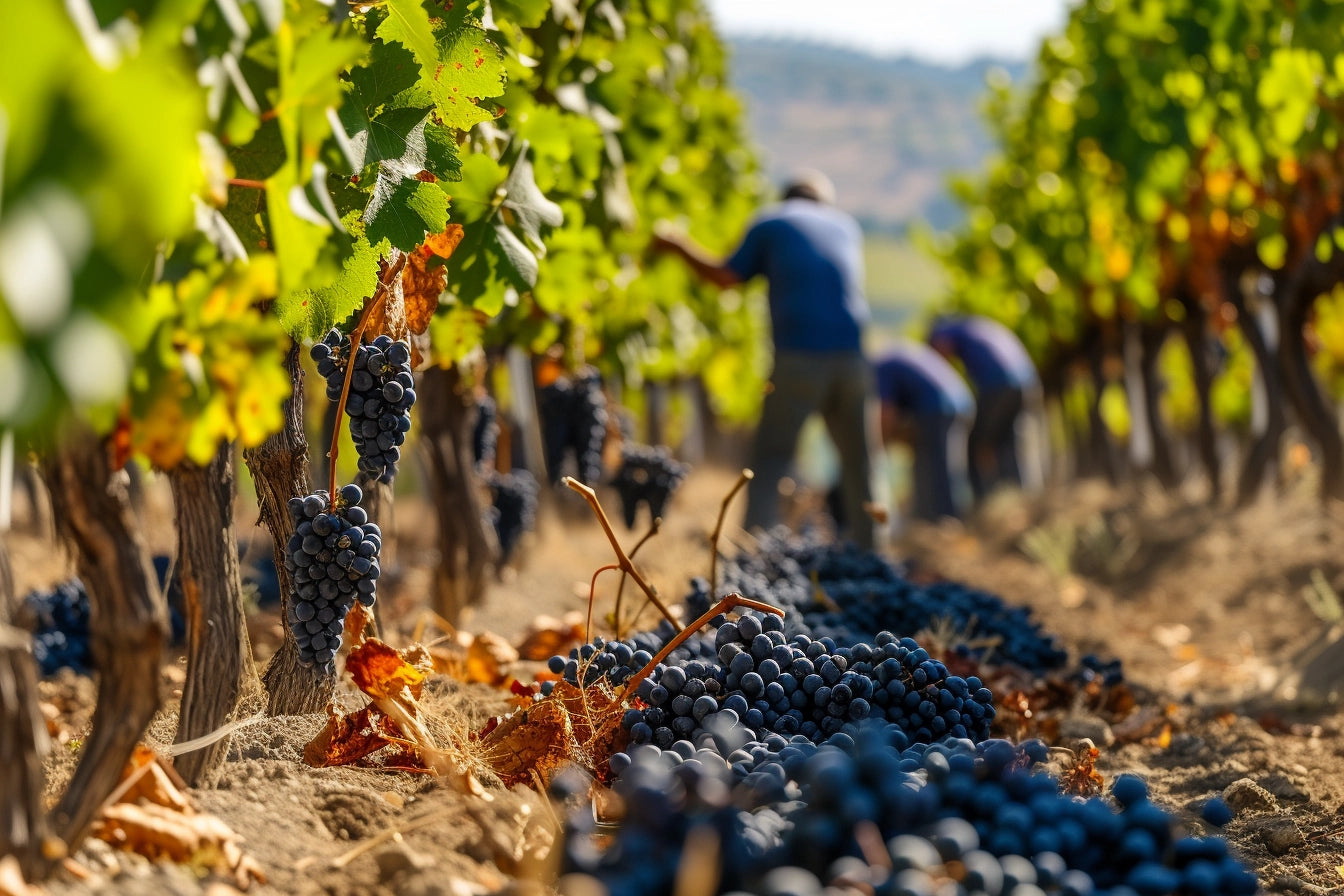
Climate is one of the strongest influences on how grapes develop.
Temperature, sunlight and rainfall affect when vines flower, when grapes ripen and the balance of sugar, acidity, aromas and other compounds at harvest. A cooler site can allow grapes to ripen more slowly and retain acidity, while warmer conditions can accelerate ripening and increase sugar accumulation.
But “cool climate” and “warm climate” are only starting points. Proximity to an ocean, local winds, rainfall patterns, cloud cover and temperature differences between day and night can all modify the conditions within a wine region.
This is also why climate change matters so much to established wine areas. Changes in temperature and water availability can alter harvest dates and grape composition even when vineyards remain in exactly the same place. We explore this further in How Climate Change Is Reshaping the World’s Wine Regions.
Does Soil Really Affect the Taste of Wine?
Yes — but probably not in the way it is sometimes described.
Wine language frequently connects limestone, slate, granite or chalk directly with flavours described as “mineral”, “flinty” or “stony”. Scientific evidence does not support the simple idea that geological minerals travel through the vine and reappear as corresponding flavours in the glass.
Soil influences vines in more complex and important ways. Its depth, structure and composition affect:
How quickly water drains
How much water the soil can retain
Root development
Soil temperature
Availability of nutrients
Vine growth and stress
A recent review of vineyard soils identified factors such as soil water, nitrogen, depth and temperature as important terroir variables. Scientific reviews also note that a direct connection between specific soil minerals and particular wine flavours has not been demonstrated.
So when wine lovers talk about limestone or gravel terroir, the meaningful question is often how that soil changes the growing conditions of the vine, rather than whether we can literally taste the rock.
Why Do Altitude, Slopes and Vineyard Position Matter?
Two vineyards in the same region can experience different conditions simply because one is higher, steeper or facing another direction.
Altitude generally brings cooler temperatures. Slope and aspect influence how much sunlight vines receive, while topography can affect drainage and air movement.
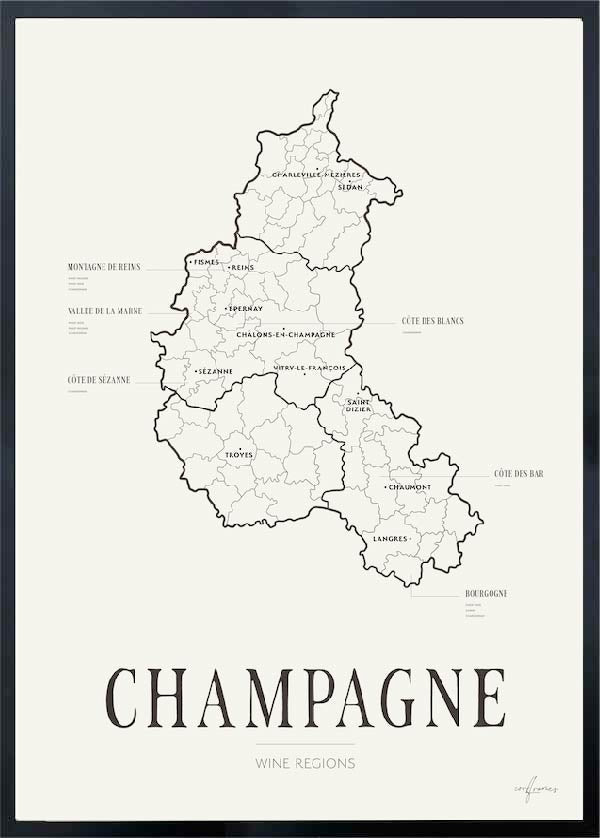
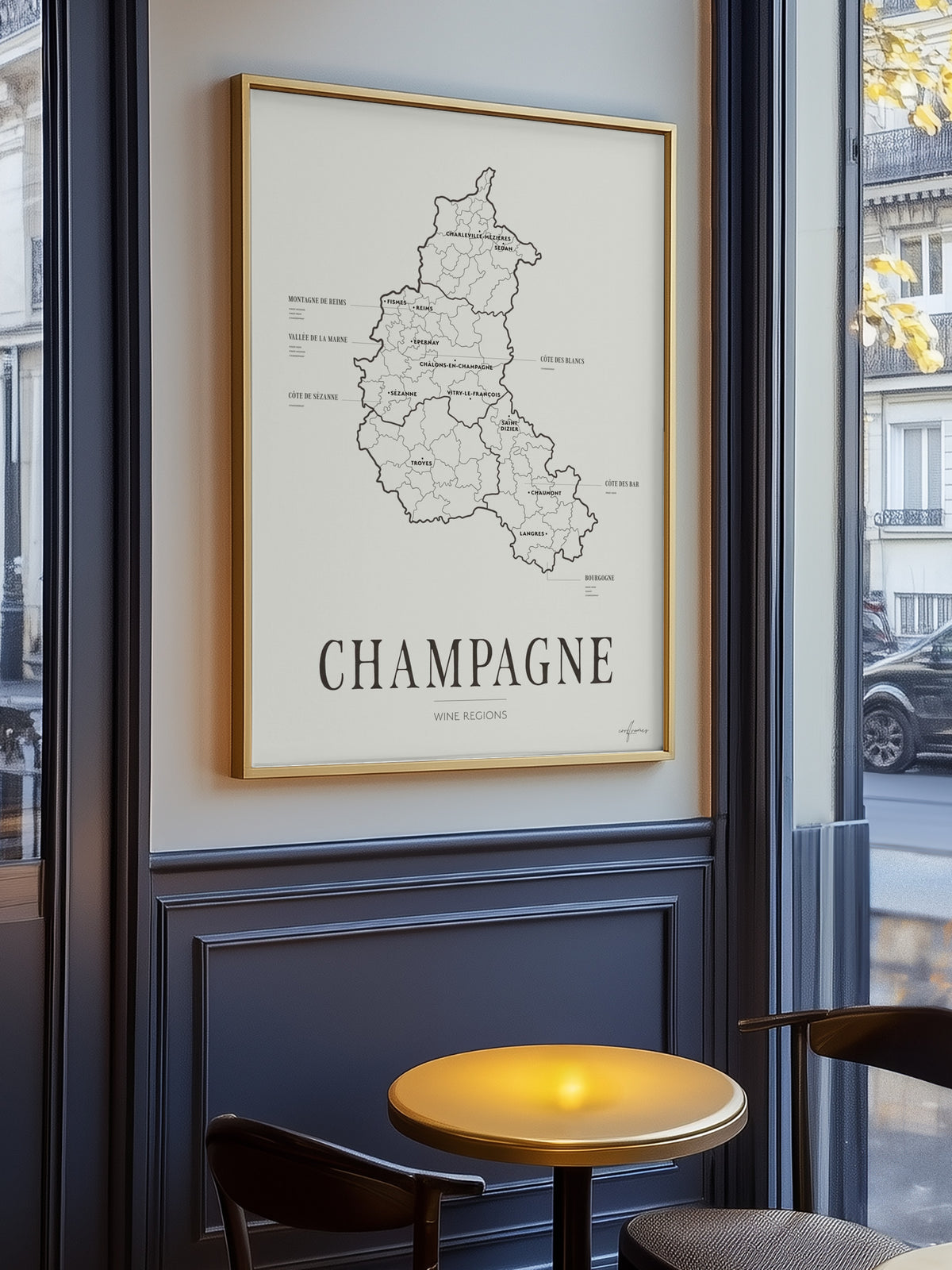
Champagne offers a useful example. Many vineyards are planted on hillsides, where slope affects sunlight exposure and allows excess rainwater to drain away. The official Champagne organisation identifies climate, soil and topography as key parts of the region’s terroir.
These differences can occur at surprisingly small scales. That is one reason famous wine regions are often divided into villages, vineyards and individual plots rather than treated as a single uniform landscape.
Why Can the Same Grape Taste Different in Different Regions?
Terroir becomes easier to understand when you follow one grape from place to place.
Chardonnay grown in cool Chablis can produce wines associated with high acidity and restrained fruit, while Chardonnay grown in a warmer climate may reach greater ripeness and show a different fruit profile.
Pinot Noir is closely associated with Burgundy, but it is also grown successfully in places such as Oregon, California, New Zealand and Germany. Different climates, vineyard sites and winemaking traditions can produce remarkably different expressions of the same variety.
The same principle applies within individual countries. Sangiovese from Chianti Classico and Montalcino does not automatically taste identical, just as Tempranillo from Rioja and Ribera del Duero can express itself differently.
This does not mean every difference comes from terroir. Harvest timing, fermentation, oak ageing and other winemaking decisions also shape the finished wine. The useful idea is that grape variety tells you what is planted; terroir helps explain what happened to that grape in a particular place.
How Can a Wine Map Help You Understand Terroir?
Wine becomes much easier to understand once appellations stop being isolated names and become actual places.
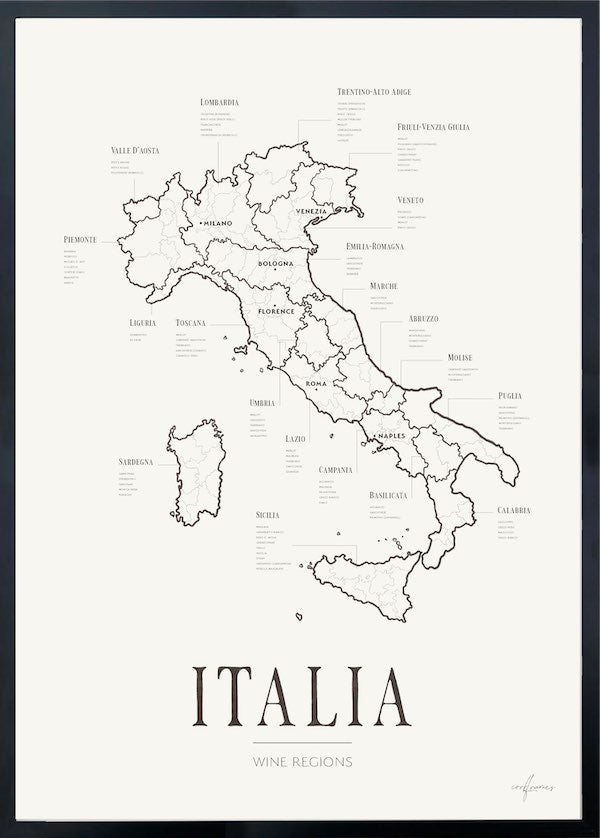
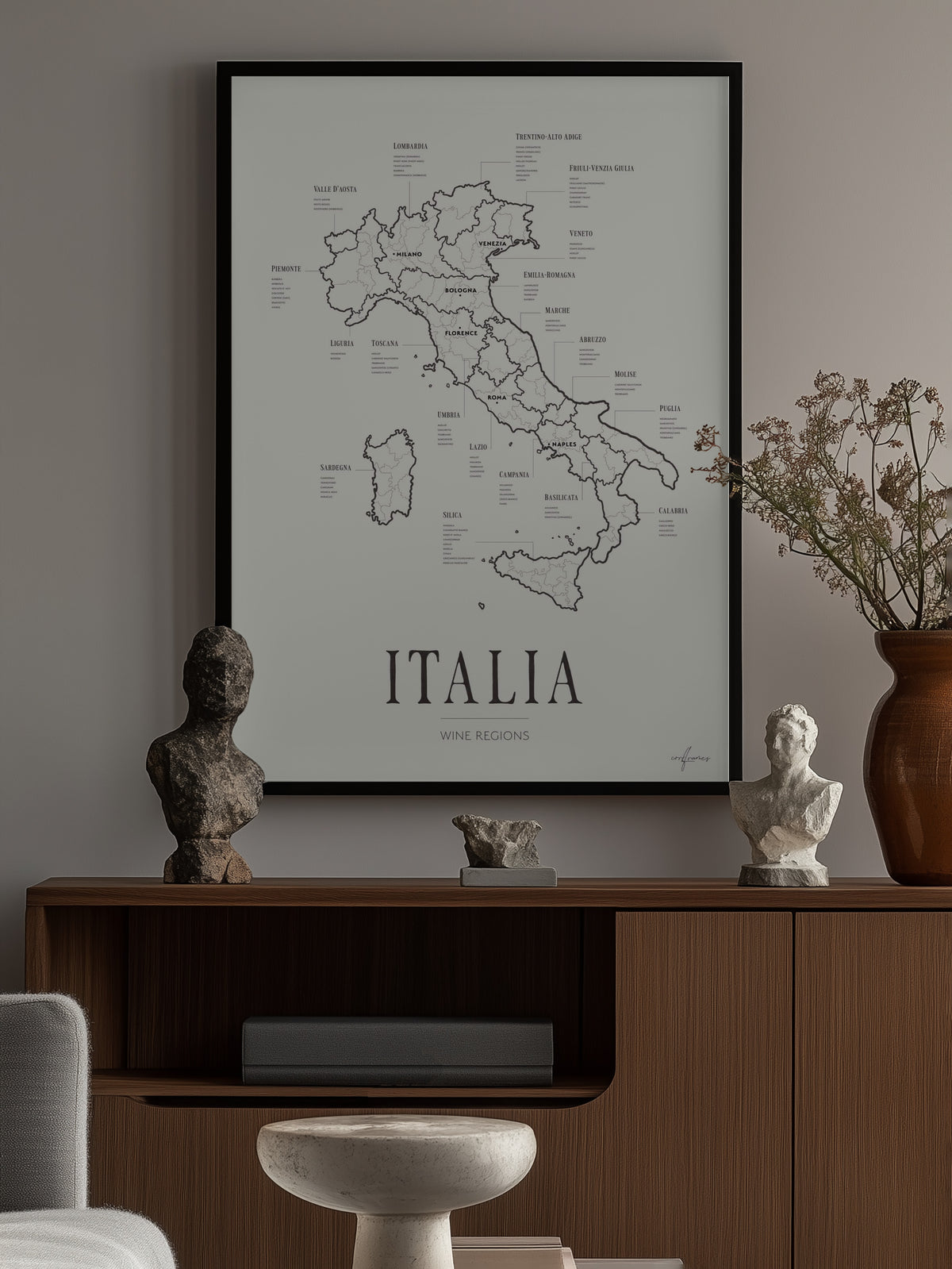
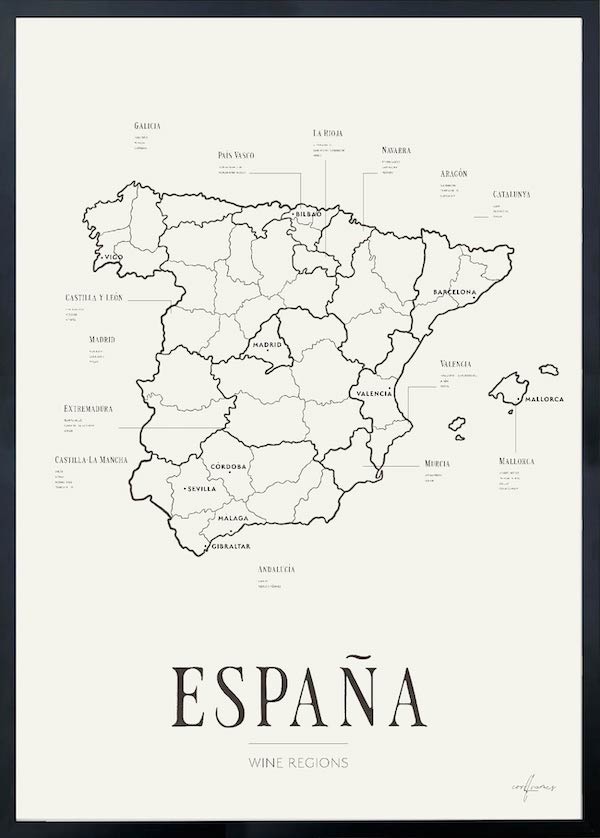
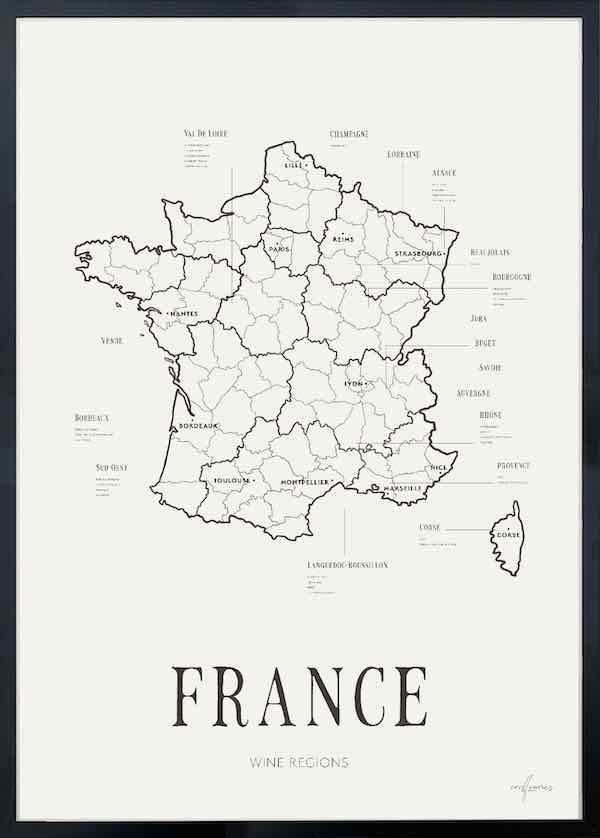
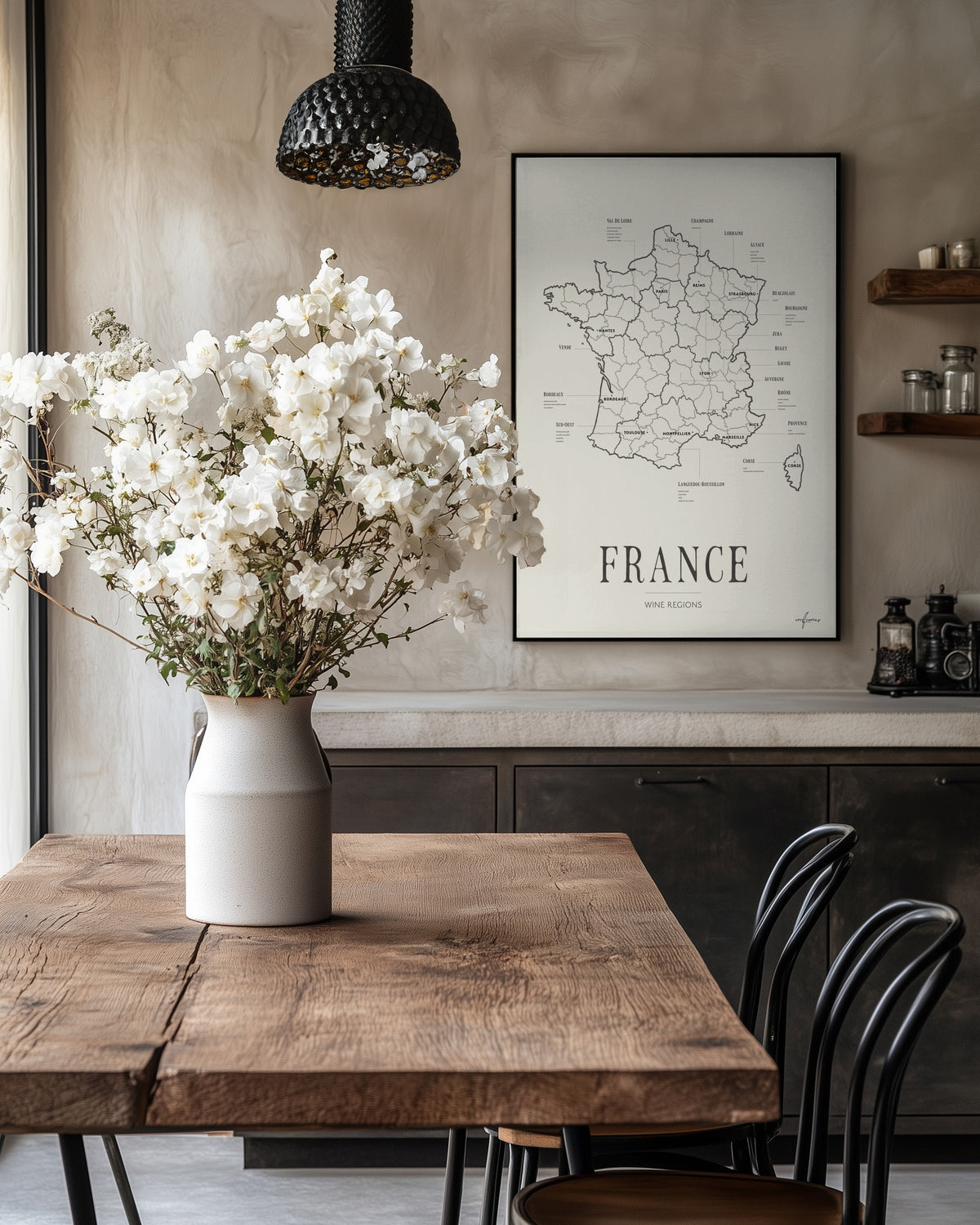
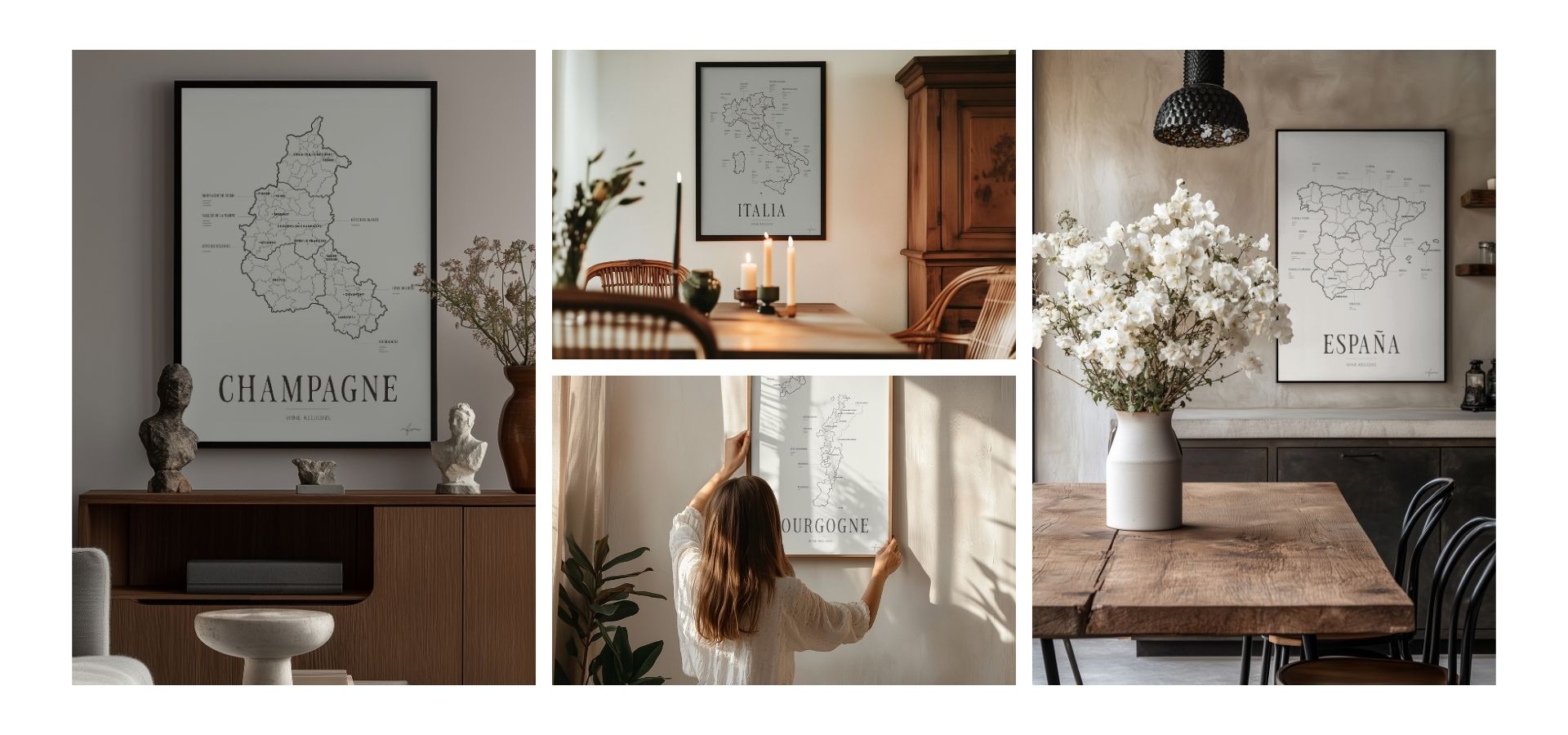
A map allows you to see where Bordeaux lies in relation to the Atlantic, where Champagne sits in northern France, how Tuscany stretches through central Italy and where individual regions sit in relation to mountains, coasts and neighbouring wine areas.
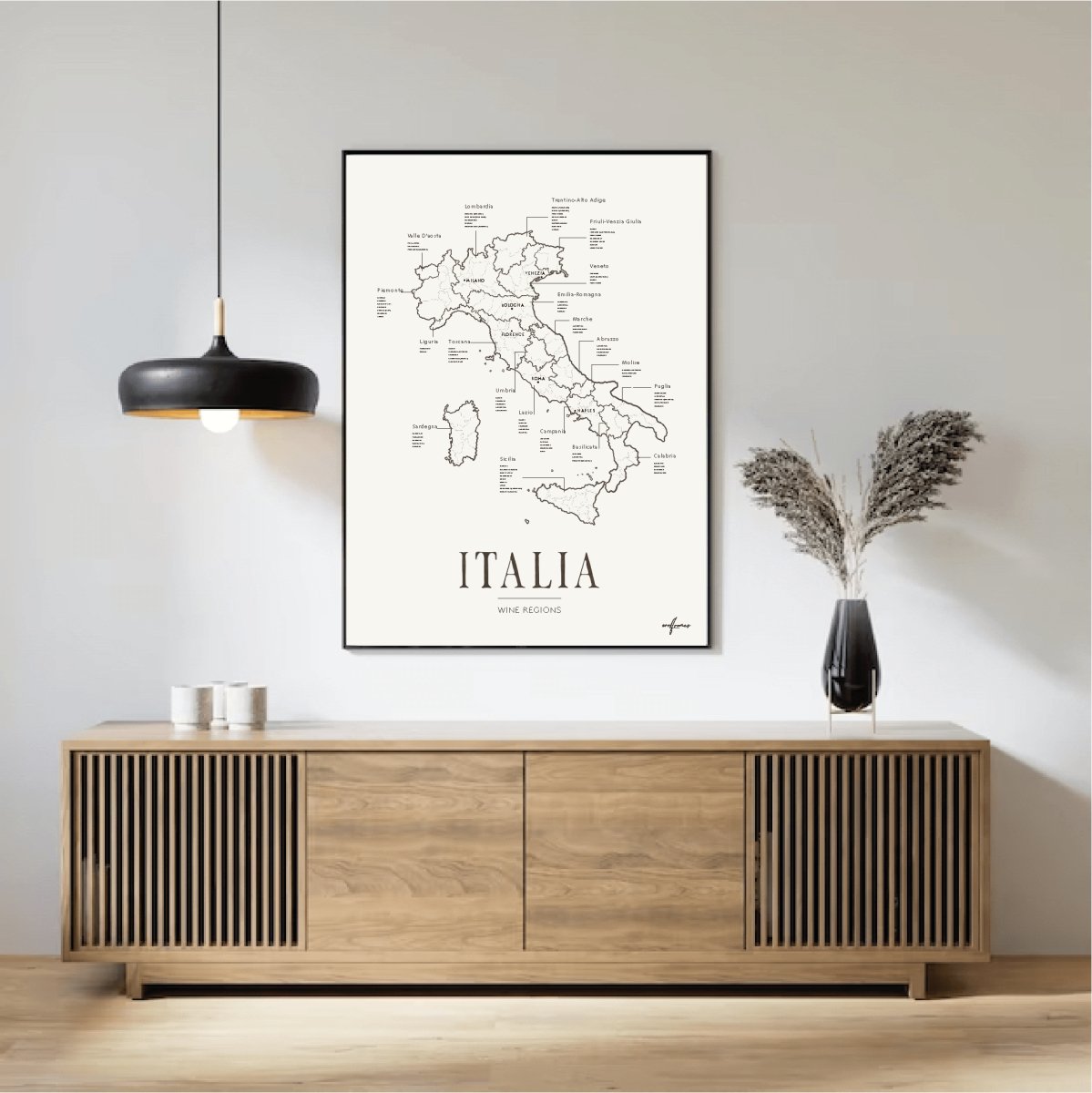
Corkframes Wine Maps provide a visual overview of many of Europe’s established wine countries and regions, including France, Italy, Spain, Champagne, Bordeaux, Burgundy, Tuscany and Barolo.
Explore Corkframes Wine Maps
A wine map cannot show every difference in soil, slope or microclimate. What it can do is provide the geographical framework that makes those details easier to understand.
That is ultimately the value of learning about terroir. Instead of thinking about wine solely in terms of grape varieties, you begin to see every bottle as the result of a grape grown somewhere specific — under a particular climate, on a particular site, and shaped by the people who work there.
Frequently Asked Questions
What is terroir in simple terms?
Terroir is the interaction between a wine’s place of origin and the way vines are cultivated there. It includes climate, soil, topography, landscape, biodiversity and viticultural practices.
Does soil give wine a mineral taste?
Soil can influence wine indirectly through water availability, drainage, temperature, nutrients and vine development. However, there is no established scientific mechanism showing that geological minerals in vineyard soil simply transfer into corresponding “mineral” flavours in wine.
Is terroir the same as a wine region?
No. A wine region is a defined geographical area. Terroir describes the environmental and human factors within a place that influence vines and wine. A single wine region can therefore contain many different terroirs.