
How Is Climate Change Affecting Wine?
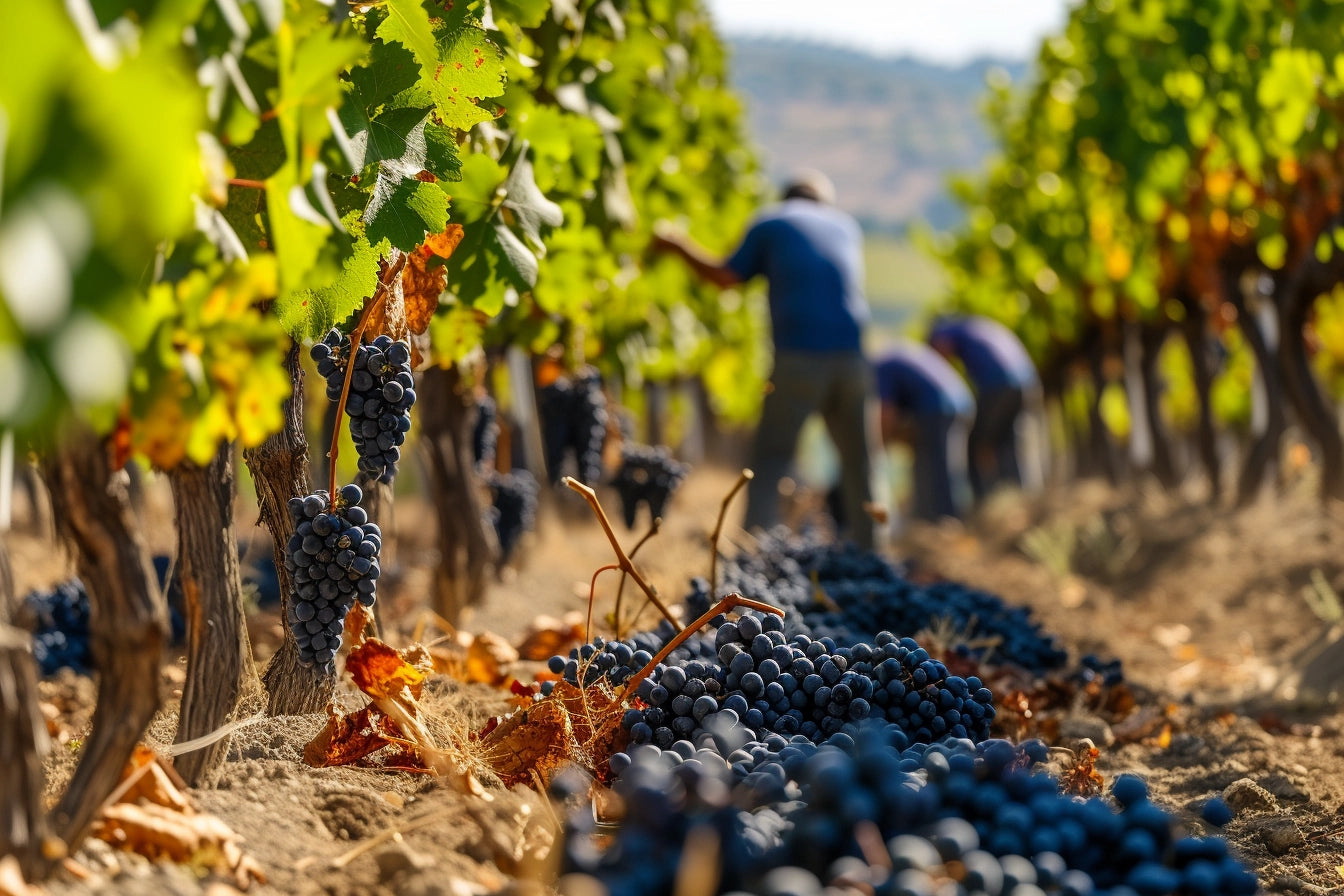
Climate change is already altering the conditions under which wine grapes grow. Higher temperatures can accelerate the vine’s growing cycle and push ripening into hotter parts of summer, while changes in rainfall, drought, frost and extreme heat can affect yields and grape composition. Research published in Nature Reviews Earth & Environment found that harvests in many wine regions have advanced by roughly two to three weeks over the past 40 years.
That does not mean the world’s vineyards are simply moving north. The picture is more complex. Established regions are adapting, growers are looking towards higher elevations and cooler sites, and some areas previously considered marginal for wine are becoming more suitable.
Why Are Grapes Ripening Earlier?
Temperature has a major influence on grapevine development. Warmer growing seasons can bring forward flowering, véraison and harvest, altering the balance that producers seek between sugar, acidity, flavour and phenolic maturity. The OIV specifically monitors harvest dates, sugar concentration, acidity, pH and alcohol when assessing climate-related changes in viticulture.
As grapes ripen, sugars generally increase while acidity changes. When ripening is accelerated by heat, growers may face difficult decisions about harvest timing: picking earlier can help preserve freshness, while waiting for other components of the grape to mature can result in higher sugar levels and potentially more alcoholic wines.
Climate also affects more than temperature. Water availability is increasingly important in dry regions, while extreme heat can cause sunburn, berry shrivelling and stress to the vine. Earlier spring development can also create a paradoxical problem: vines may begin growing sooner, leaving tender young shoots exposed if a late frost follows.
Individual vintages therefore remain important. A warm, dry year and a cooler, wetter one can still produce noticeably different wines from the same vineyard.
Are Wine Regions Really Moving North?
To some extent, wine production is expanding into cooler latitudes, but saying that vineyards are simply “moving north” misses much of what is happening.
A major 2024 review identified increasing suitability in places including northern France, the southern United Kingdom, Washington State, Oregon and Tasmania as temperatures rise. At the same time, some warmer, lower-lying regions face growing pressure from heat and drought.
Latitude is only one part of the story. Producers can also seek cooler conditions by planting:
At higher altitude
On slopes with less intense sun exposure
Closer to cooling maritime influences
In locations with greater day-to-night temperature variation
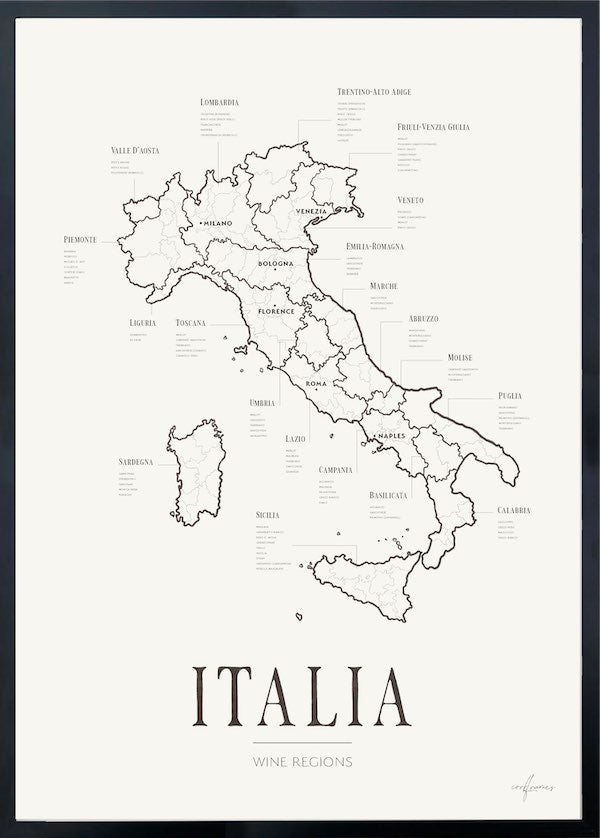
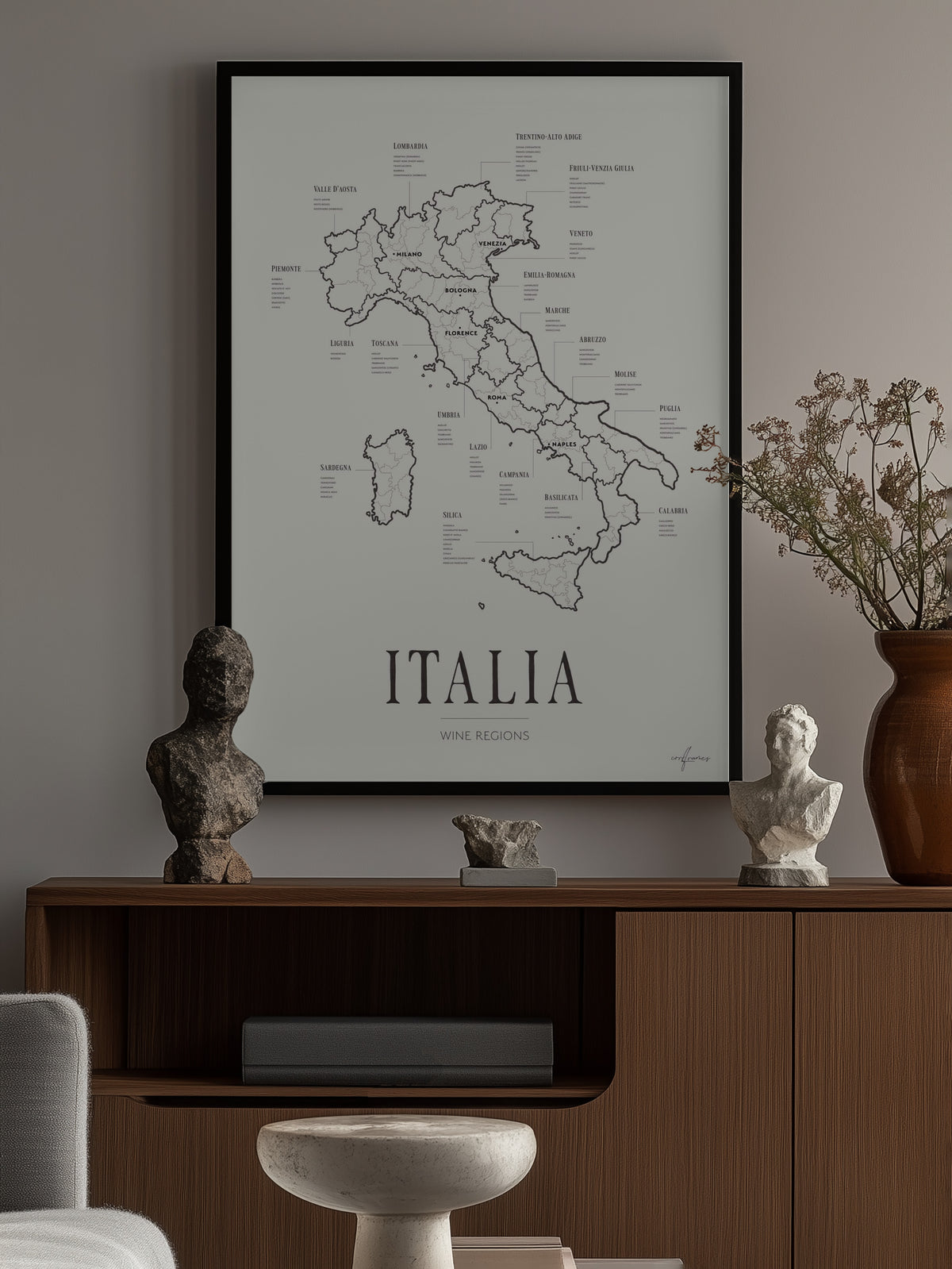
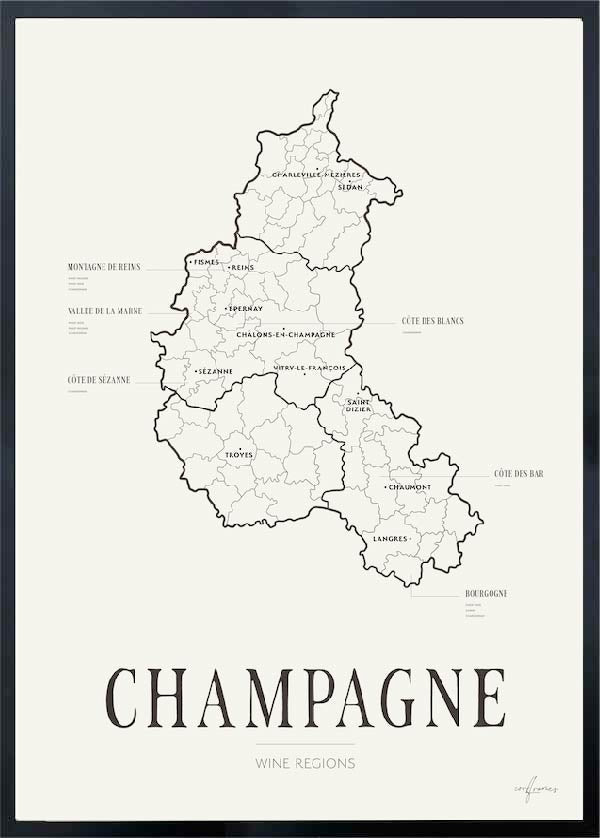
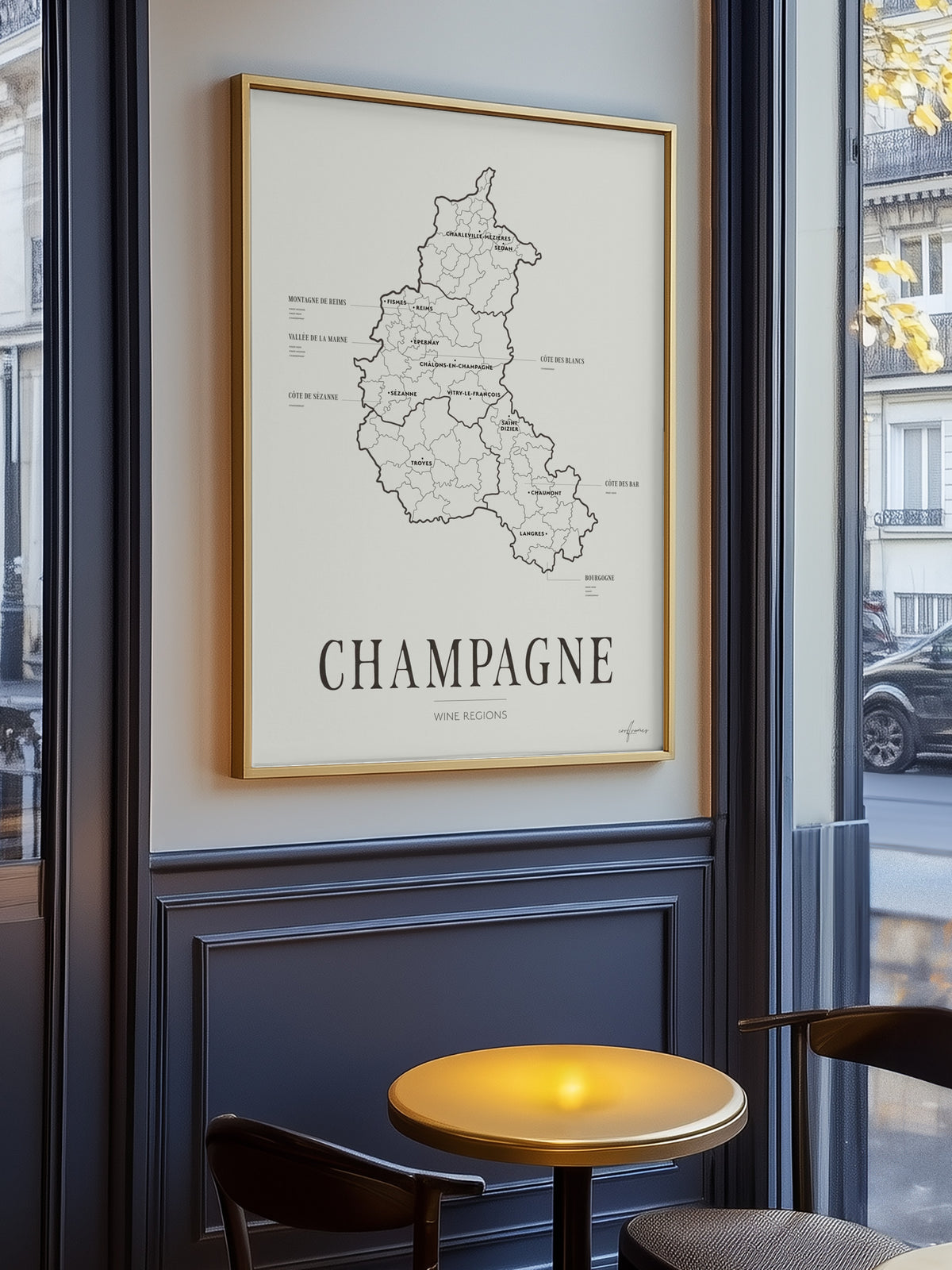
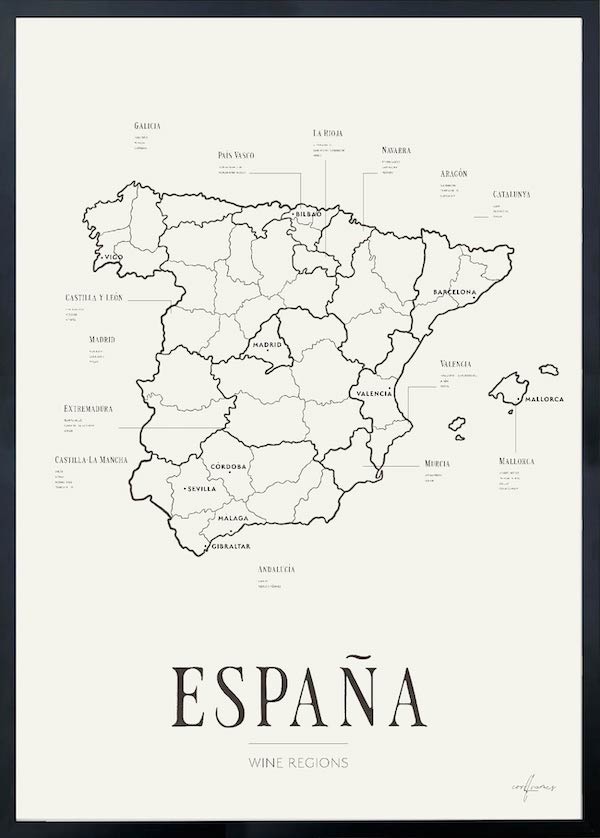
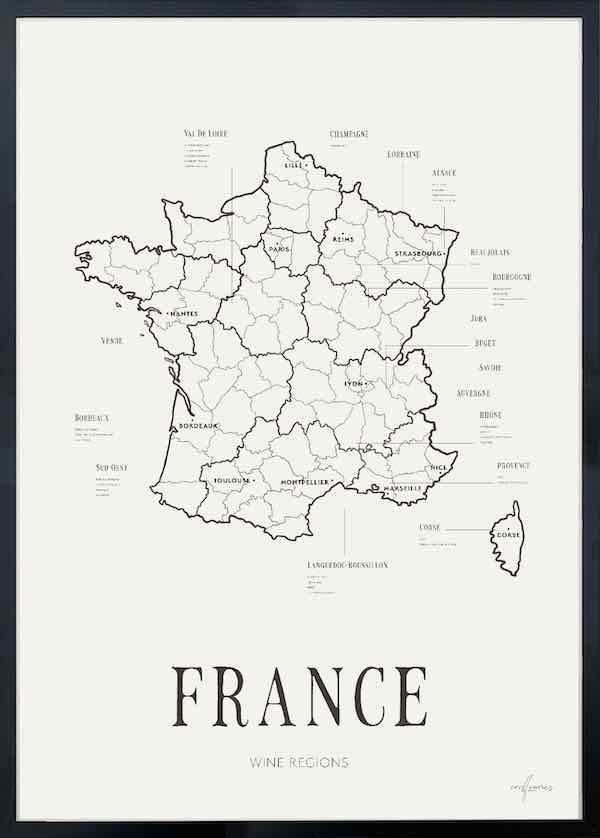
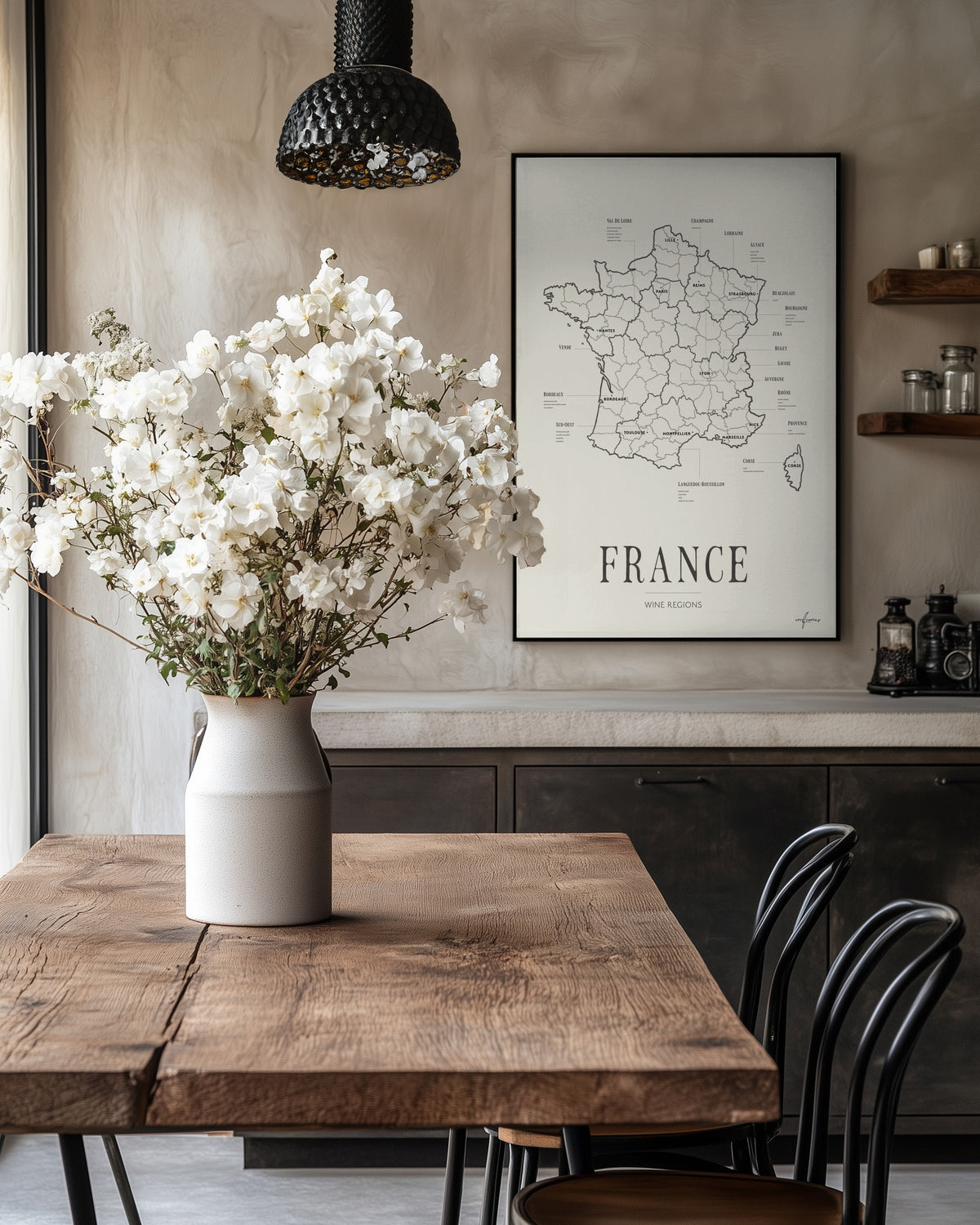
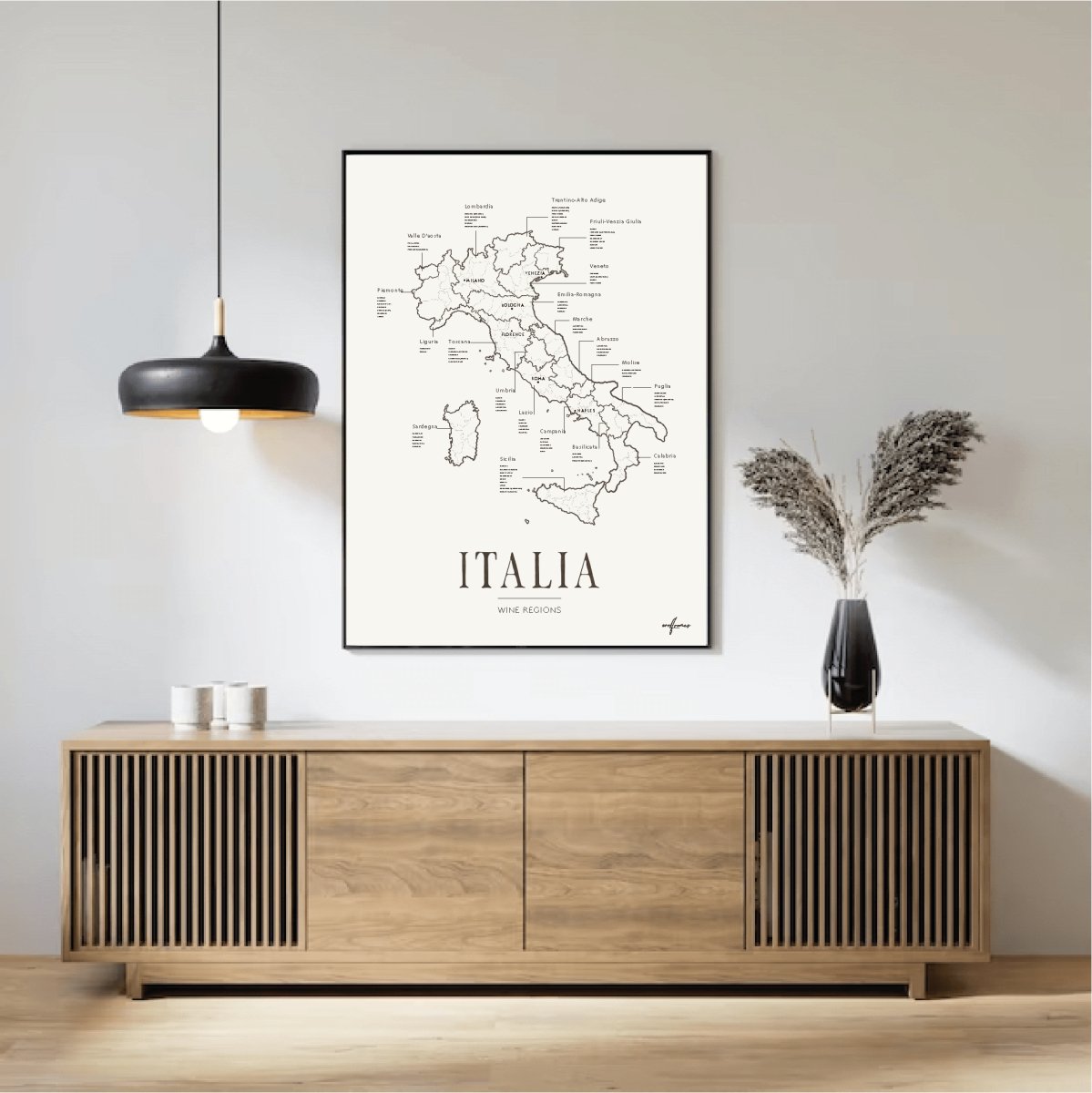
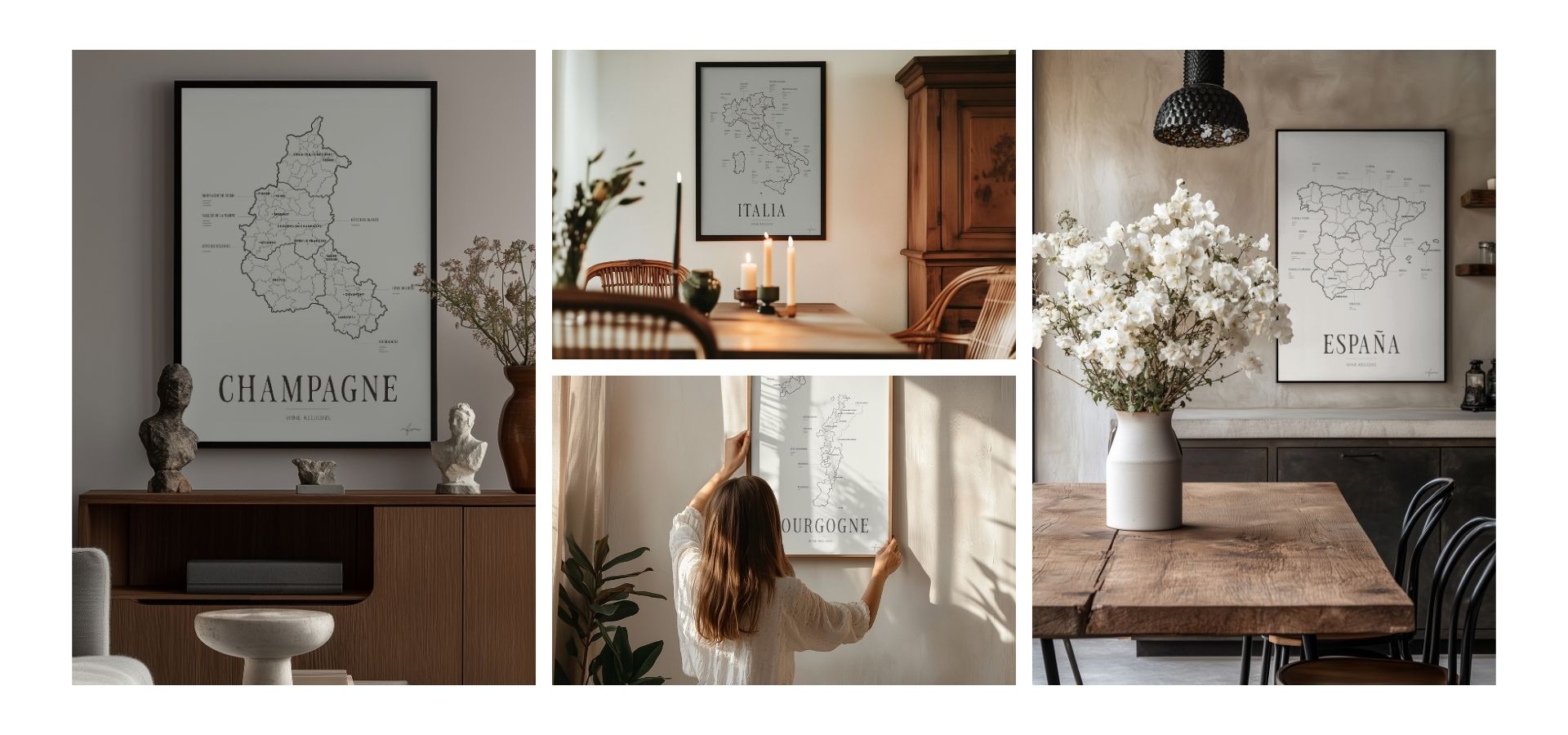
This is why geography matters so much in wine. Looking at Corkframes Wine Maps makes it easier to see how regions such as Champagne, Bordeaux, Burgundy, Tuscany and Rioja relate to latitude, coastlines and neighbouring landscapes. Corkframes currently offers maps covering several of Europe’s best-known wine countries and regions.
Which Wine Regions Face the Greatest Climate Pressure?
There is no single answer because vulnerability can differ considerably even within one appellation. A 2024 study of 1,085 European protected wine regions found large differences in climate exposure, sensitivity and ability to adapt.
Mediterranean and other warm wine regions are particularly exposed to combinations of heat and water scarcity. Research suggests that coastal and lowland areas of Spain, Italy and Greece could face substantial reductions in suitability under high levels of future warming. Parts of southern California also face significant challenges from heat and drought. These are projections rather than predictions that entire wine regions will disappear.
Wildfire can add another risk in regions such as California and Australia. Smoke exposure can introduce compounds into grapes that later produce unwanted smoky, ashy or medicinal characters in the wine — the problem commonly known as smoke taint.
Classic cooler regions are changing too. Champagne and Burgundy may experience warmer growing seasons than in the past, while Bordeaux has already altered parts of its approach to vineyard management and experimented with additional grape varieties as part of its climate adaptation strategy.
How Are Winegrowers Adapting?
Much of the future of wine will depend on adaptation rather than relocation.
Growers have a surprisingly broad range of tools available. These include changing pruning dates, managing the leaf canopy differently, improving soil water retention, selecting drought-tolerant rootstocks and planting grape varieties that ripen later or cope better with heat.
Bordeaux provides a useful example. Producers are experimenting with vineyard practices such as pruning timing, canopy management and cover crops, while several additional varieties have been authorised on a limited basis in Bordeaux and Bordeaux Supérieur as part of climate adaptation.
At a broader level, research suggests that changes in grape varieties, rootstocks and vineyard management can preserve wine-growing viability under a certain degree of warming, although adaptation has limits.
The result may be gradual rather than dramatic: different blends, different harvest dates, new vineyard sites and subtle changes in the style of wines that have been made in the same regions for generations.
What Could the Wine Map Look Like in the Future?
The geography of wine has never been completely static. Climate, trade, disease, technology and changing tastes have shaped vineyards for centuries.
What makes the current period unusual is the speed and scale of climatic change. The OIV reported that climate events affected production in both hemispheres in 2025, contributing to a third consecutive low global vintage.
Some cooler areas may gain opportunities for varieties and wine styles that were once difficult to produce reliably. At the same time, warmer regions may need to rethink varieties, vineyard sites and growing methods to preserve the balance and identity of their wines.
For wine drinkers, this makes understanding place increasingly interesting. A wine map captures the established geography of wine today, while future vintages may tell the story of how those regions adapt.
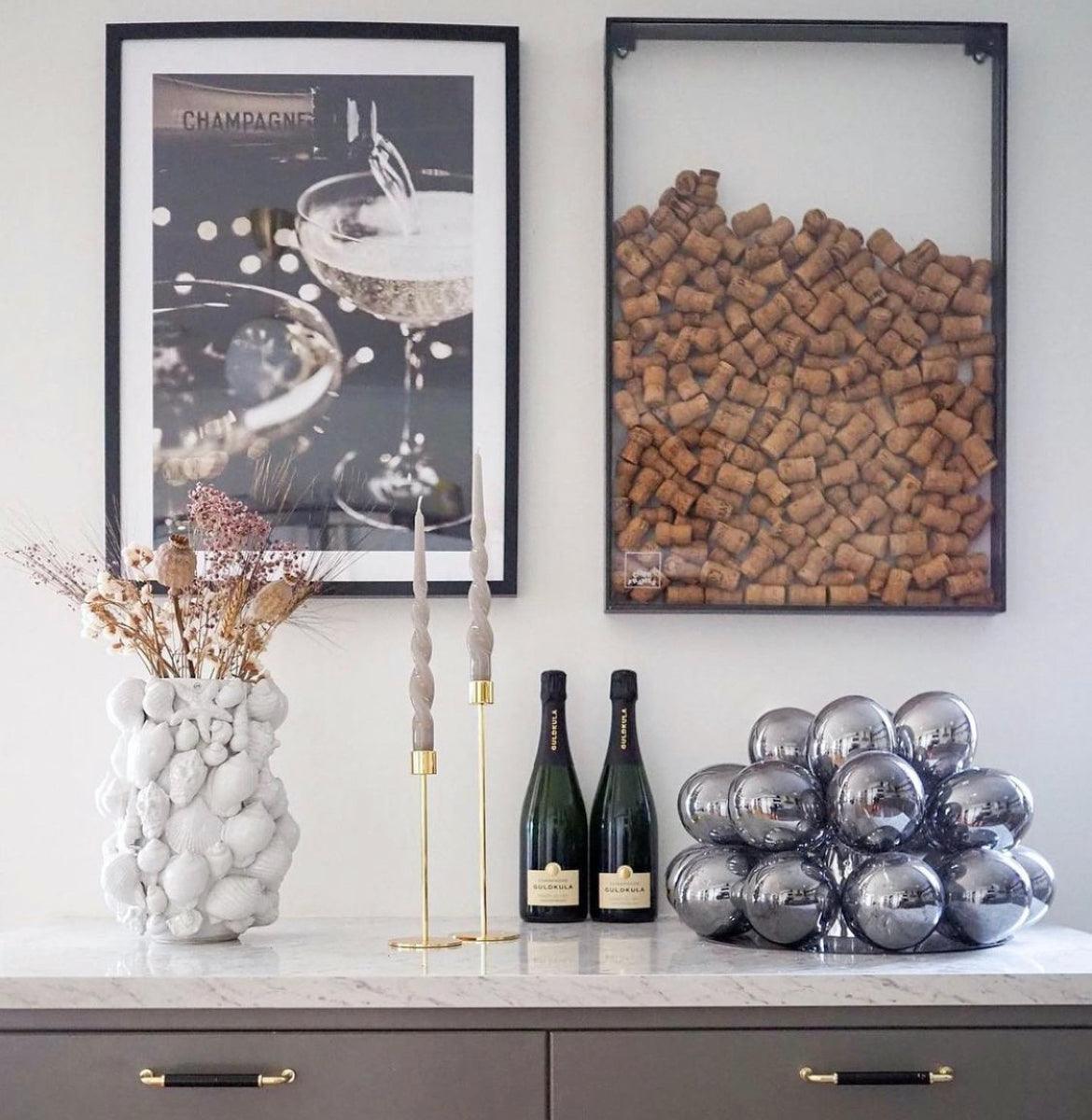
Vintage itself can become part of that memory. Saving a cork from a particularly memorable bottle in a Corkframe creates a physical record of wines, years and regions explored over time. Corkframes are handmade in Sweden and designed specifically to display collected wine corks.
The names Bordeaux, Champagne, Rioja or Tuscany are unlikely to vanish from wine culture. But what grows there, when it is harvested and how it tastes may continue to evolve — making geography, climate and vintage increasingly connected parts of understanding wine.
Frequently Asked Questions
How does climate change affect the taste of wine?
Higher temperatures can accelerate grape ripening and influence sugar, acidity, aroma and phenolic development. This can contribute to riper fruit profiles, higher potential alcohol and lower freshness in some situations, although the final style also depends heavily on grape variety, vineyard site and winemaking.
Are wine regions moving north because of climate change?
Some cooler northern regions are becoming more suitable for wine production, but vineyards are not simply moving north. Producers are also exploring higher elevations, cooler exposures, different grape varieties and new vineyard-management techniques.
Which wine regions could benefit from a warmer climate?
Some historically cool regions may gain more reliable grape ripening under moderate warming. Research points to areas including northern France, southern England, Oregon, Washington State and Tasmania as places where suitability may increase, although greater climate variability and extreme weather can still create risks.