
What Is the Difference Between Grand Cru and Premier Cru Champagne?
In Champagne, Grand Cru and Premier Cru historically refer to the village where the grapes were grown, not to an individual vineyard or a producer.
The Champagne appellation covers 319 wine-growing communes, traditionally called crus. Under the former Échelle des Crus system, villages were given a percentage rating. Grand Cru was reserved for villages rated 100%, while Premier Cru applied to villages within the next tier. The official Champagne body abolished the cru scale in 2010, but villages that had previously qualified are still allowed to use the Grand Cru and Premier Cru designations.
That historical detail matters, because the words remain visible on bottles even though the system behind them is no longer used to set grape prices.
What Does “Cru” Mean in Champagne?
The word cru can cause confusion because its meaning changes between French wine regions.
In Champagne, a cru traditionally refers to an entire wine-growing village or commune. It does not identify one particular vineyard. The official Champagne vineyard currently comprises 319 communes and around 34,000 hectares of vines.
This is very different from Burgundy, where terms such as Grand Cru and Premier Cru are closely associated with specific vineyard sites.
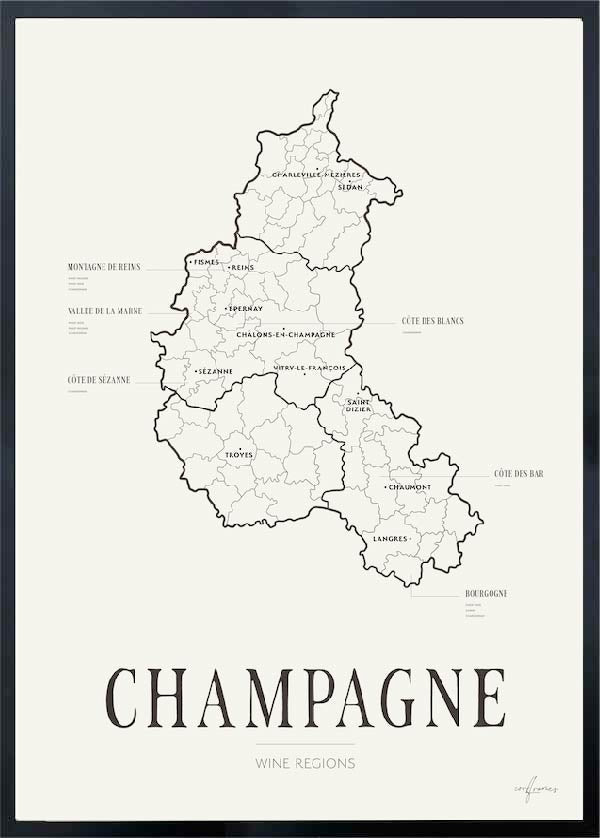
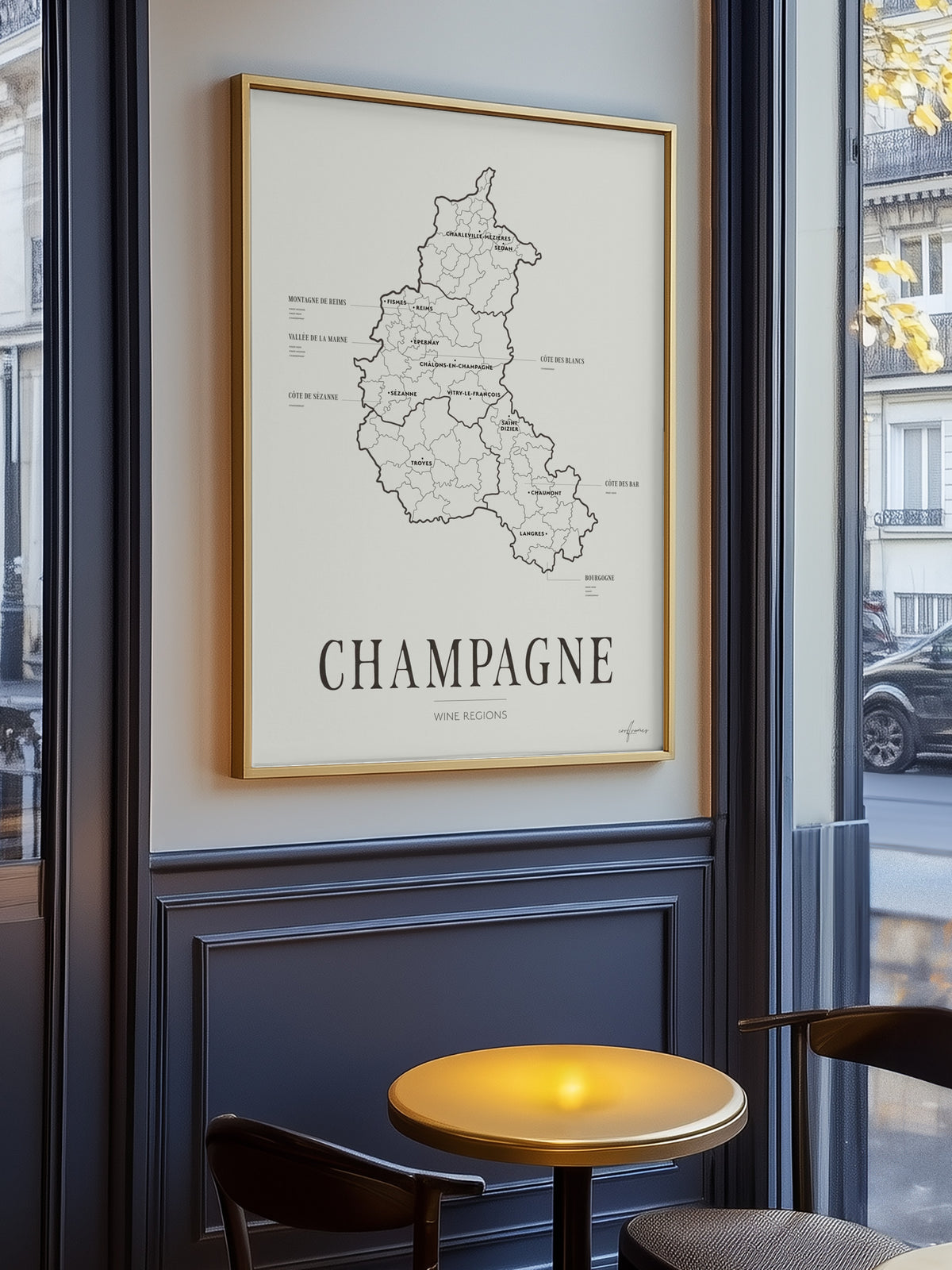
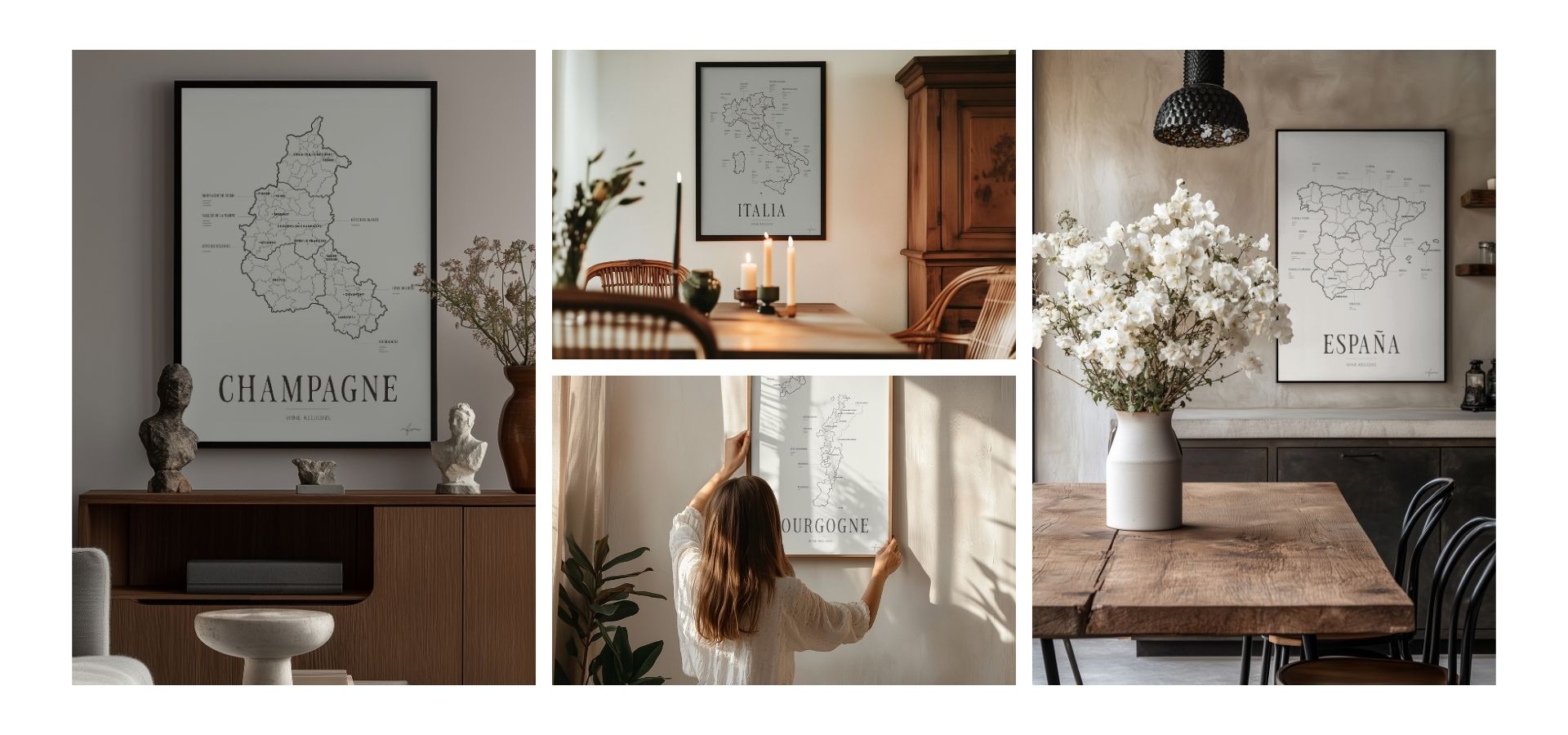
Understanding the geography therefore makes Champagne classifications much easier to follow. Corkframes’ Champagne Wine Map shows the main areas of Champagne and the grape varieties associated with them, helping connect names on a bottle with their location in the region.
What Is Grand Cru Champagne?
Grand Cru Champagne is made using grapes from villages that historically received the highest rating under the old classification system.
There are 17 villages traditionally recognised as Grand Cru, concentrated mainly in the Montagne de Reims and Côte des Blancs, with others around the Grande Vallée de la Marne. The official Champagne directory still describes villages such as Ambonnay and Aÿ as Grand Cru.
Well-known Grand Cru villages include:
Aÿ
Ambonnay
Bouzy
Verzenay
Verzy
Avize
Cramant
Chouilly
Le Mesnil-sur-Oger
Some are particularly associated with Pinot Noir, while villages in the Côte des Blancs are renowned for Chardonnay.
If a bottle is labelled Grand Cru Champagne, the grapes must come from villages entitled to that designation. The term tells you something meaningful about origin, but it does not automatically tell you how the wine was made, how long it was aged or whether you will prefer it to another Champagne.
What Is Premier Cru Champagne?
Premier Cru refers to villages that occupied the tier immediately below Grand Cru under the historic classification.
Examples include villages such as Pierry, which the official Champagne organisation continues to identify as Premier Cru.
As with Grand Cru, the designation relates to geographical origin rather than a guaranteed house style. Two Premier Cru Champagnes can taste very different depending on:
Grape varieties
Individual vineyard sites
Vintage
Blend
Length of ageing
Use of reserve wines
Oak or stainless-steel fermentation
Dosage
Producer decisions
This is why the classification is useful, but never sufficient on its own when choosing a bottle.
Is Grand Cru Champagne Better Than Premier Cru?
Not necessarily.
Grand Cru represents a historically higher-rated village classification, but it should not be read as a simple quality score for the finished wine.
Champagne is extraordinarily fragmented. The region contains close to 280,000 individual vineyard plots, and the Comité Champagne itself emphasises that terroir can vary at plot level rather than simply from one village to another.
Producer skill, vineyard position, vintage, grape quality and winemaking can therefore matter just as much as the village classification.
A thoughtful Premier Cru from an excellent grower can be far more interesting to you than a Grand Cru made in a style you do not enjoy.
The most useful interpretation is:
Grand Cru and Premier Cru tell you about origin. They do not provide a complete ranking of quality.
Where Are the Grand Cru Villages in Champagne?
Many of the best-known Grand Cru villages cluster in two important areas.
The Montagne de Reims contains several celebrated Pinot Noir villages, including Ambonnay, Bouzy, Verzenay and Verzy.
The Côte des Blancs contains famous Chardonnay villages such as Avize, Cramant and Le Mesnil-sur-Oger.
Understanding where these places sit in relation to Reims, Épernay and the surrounding vineyard areas makes Champagne labels considerably easier to interpret.
The Champagne Wine Map provides a visual overview of the region, while our Champagne Region Guide: Grapes, Villages and Terroir explains the main growing areas and principal grapes in more detail.
How Should You Use Grand Cru and Premier Cru When Choosing Champagne?
Treat the classification as one useful clue rather than the final answer.
If you see Grand Cru or Premier Cru on a bottle, ask:
Which village do the grapes come from?
Which grapes dominate the blend?
Is it vintage or non-vintage?
Is it Blanc de Blancs, Blanc de Noirs or a blend?
Who produced it?
How was it aged?
Once those pieces come together, the words on the label become much more informative.
Grand Cru and Premier Cru are ultimately part of Champagne’s geography. Learning where the villages are — and what grows there — gives the classification far more meaning than simply assuming one tier must always taste better.
Frequently Asked Questions
How many Grand Cru villages are there in Champagne?
There are 17 villages traditionally recognised as Grand Cru in Champagne. They are concentrated mainly in the Montagne de Reims, Côte des Blancs and Grande Vallée de la Marne.
Is Grand Cru the highest classification in Champagne?
Under Champagne’s historic village-rating system, Grand Cru represented the highest tier. The Échelle des Crus itself was abolished in 2010, although eligible villages may continue to use the Grand Cru and Premier Cru terms.
Does Premier Cru mean lower-quality Champagne?
No. Premier Cru describes the historical classification of the village where the grapes originate. The quality and character of the finished Champagne also depend on vineyard sites, grapes, vintage, producer and winemaking.