

Forget Bordeaux, Tuscany and Napa for a moment. High in the Andes, at altitudes where many travellers begin to notice the thin air, some of the world’s most distinctive vineyards are taking root. Bolivia remains a small player on the international wine scene, but its combination of extreme altitude, ancient vines and a new generation of ambitious producers makes it one of the world’s most unexpected and underrated wine destinations.
When most people think of Bolivia, Salar de Uyuni, La Paz and the dramatic Andes probably come to mind first. Wine tends to appear much further down the list.
And perhaps that is exactly what makes Bolivia so fascinating.
While neighbouring Argentina and Chile have long built international wine identities around grapes such as Malbec, Cabernet Sauvignon and Carmenère, Bolivia has developed largely out of the spotlight. There is no enormous export industry, and Bolivian bottles are still difficult to find in many international markets.
But that does not mean Bolivia’s wine culture is new.
Quite the opposite.
Wine grapes have been cultivated in what is now Bolivia since the late 16th century. Vine growing in the Tarija region dates back to the 1580s, before expanding into other areas including Cinti and Potosí.
The difference is that the wider wine world is only now beginning to discover what has been happening here for centuries.
Winemaking Closer to the Sky
What separates Bolivia from almost every other wine-producing country is altitude.
In the south of the country, vineyards are commonly found between approximately 1,600 and 2,400 metres above sea level, with some vineyards reaching even higher elevations.
Tarija, the centre of Bolivia’s modern wine industry, is home to vineyards beginning at around 1,600 metres, while parts of the Cinti Valley sit at roughly 2,400 metres above sea level.
For comparison, many of Europe’s classic vineyards lie only a few hundred metres above sea level.
The conditions here are dramatically different.
The air is thinner. Solar radiation is intense. Days can be warm, while temperatures drop quickly after sunset.
That difference between daytime and nighttime temperatures plays an important role in how the grapes develop. Strong sunshine promotes ripening and flavour concentration, while cooler nights help the grapes retain freshness and acidity.
The result can be wines that combine ripe fruit and concentration with remarkable freshness.
This is viticulture at the edge of what seems possible.
And Bolivia has turned that extreme environment into part of its identity.
Tarija – Bolivia’s Wine Capital
If Bolivia is one of the world’s most unexpected wine countries, Tarija is its natural capital.
The city lies in a fertile valley in southern Bolivia, not far from the border with Argentina. Vineyards spread across the landscape between the surrounding mountains.
A large proportion of the country’s professional wine production can be found here, with both established wineries and smaller producers experimenting with new techniques and styles.
The grape varieties can sound surprisingly familiar.
Cabernet Sauvignon, Syrah, Tannat, Barbera, Riesling and several aromatic white varieties are cultivated throughout the region. Muscat of Alexandria, locally known as Moscatel de Alejandría, also plays an especially important role in Bolivia.
So it is not necessarily the grape varieties themselves that make Bolivian wine unusual.
It is what the altitude does to them.
A Cabernet Sauvignon grown in an Andean vineyard two kilometres above sea level develops under very different conditions from a Cabernet grown in Bordeaux or Napa Valley.
For wine lovers, Bolivia therefore becomes a fascinating experiment: familiar grape varieties speaking an entirely different geographical language.
Cinti – Where Vines Climb Trees
Tarija may represent much of Bolivia’s modern wine industry.
But to understand what makes the country truly unique, the journey needs to continue to the Cinti Valley.
Here, the story becomes older – and considerably more unusual.
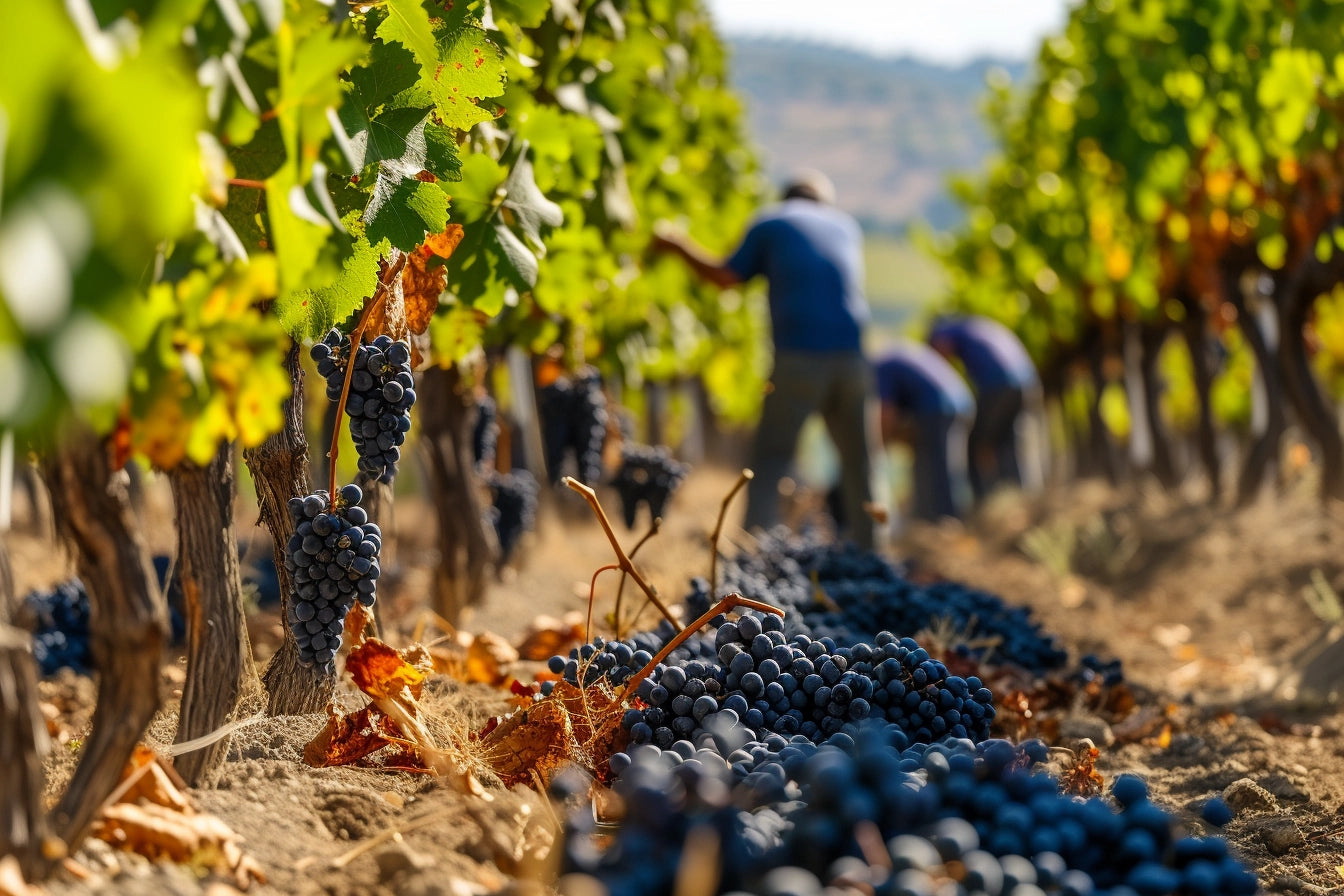
Between dramatic red mountains and narrow green valleys, vines are still grown in places according to an ancient agricultural tradition. Rather than being trained exclusively along perfectly ordered vineyard rows, some vines grow alongside native trees and climb high into their branches.
The result looks more like a historic garden than a modern vineyard.
Cinti is also home to exceptionally old vines, including some ungrafted vines and historic Criolla grape varieties.
The valley’s wine culture stretches back to the Spanish colonial period, and the region received its own protected designation of origin, Denominación de Origen Valle de Cinti, in 2014.
Today, a number of producers are working to preserve old vines and local genetic material while introducing these historic wines to a new generation of drinkers.
This may be where Bolivia’s greatest opportunity lies.
Not in trying to imitate Argentina or Chile, but in producing wines that simply cannot be replicated anywhere else.
Ancient Grapes Find New Voices
For much of modern wine history, so-called international grape varieties dominated the global market.
Cabernet Sauvignon, Chardonnay and Merlot were planted throughout the world partly because consumers already recognised the names.
Today, the wine world is moving in another direction.
Old grape varieties, local traditions and wines with a strong sense of place are becoming increasingly attractive to curious drinkers.
Suddenly, Bolivia possesses exactly what many wine lovers are searching for.
In Cinti, producers continue to work with historic Criolla varieties and old plantings of grapes such as Moscatel de Alejandría. Several wineries are also actively preserving old vines and rediscovering winemaking traditions that have existed in the region for centuries.
It is no longer simply about producing good wine.
It is also about preserving a piece of South American wine history.
And Then There Is Singani
It is almost impossible to talk about Bolivia’s vineyards without mentioning Singani.
This aromatic grape spirit is deeply connected to Bolivian culture and is traditionally distilled from Moscatel de Alejandría.
Historically, an important proportion of Bolivia’s grape production has been used for Singani rather than table wine.
For visitors, this means that travelling through Bolivia’s wine regions involves more than simply tasting reds and whites.
Two related drinking traditions exist side by side.
During the same trip, you may discuss ancient vines, taste a high-altitude Cabernet Sauvignon and, a few hours later, be handed a glass of Bolivia’s most distinctive grape spirit.
It gives the destination yet another layer of individuality.
A Small Wine Country with a Big Opportunity
Bolivia’s greatest disadvantage may also be one of its greatest strengths.
Production remains small.
Internationally, Bolivia is still a niche wine country. Most consumers have never tasted a Bolivian wine, and many have probably never heard of Tarija or Cinti.
That means there is still no fixed expectation of what “Bolivian wine” is supposed to taste like.
The country’s producers have the opportunity to write that story themselves.
International attention is beginning to grow, particularly around Bolivia’s extreme-altitude vineyards, historic Criolla grapes and ancient vines.
That does not mean Bolivia is about to compete with Argentina, France or Italy in terms of volume.
Nor does it need to.
The modern wine world already has plenty of major producers.
What it has far fewer of are destinations that still feel genuinely undiscovered.
A Wine Destination for Those Who Have Already Seen the Obvious
There are easier wine trips.
In Tuscany, wineries are close together and the infrastructure has been developed around wine tourism for decades. Champagne has centuries of international recognition. Napa has turned the winery visit into an entire industry.
Bolivia offers something different.
Here, the feeling of discovery is part of the experience.
Travelling through the dry landscapes of the Andes and suddenly finding green vineyards between the mountains can feel almost improbable.
Discovering that some of those vineyards have existed for centuries makes the contrast even more extraordinary.
Bolivia may not have one of the world’s most famous wine regions.
But it may have one of its most fascinating.
For the curious wine lover, that can be far more exciting.
Why Bolivia Is Emerging as an Essential Wine Destination
For travellers searching for underrated wine destinations, high-altitude wines and unique wine regions in South America, Bolivia deserves a place near the top of the list. The country’s wine production combines extreme vineyard elevations, historic Criolla grape varieties, old vines and distinctive regions such as Tarija and the Cinti Valley. As interest in authentic, terroir-driven wines continues to grow, Bolivian wine offers something increasingly rare in the global wine industry: a destination with centuries of winemaking history that still feels genuinely undiscovered. For anyone planning a South American wine trip beyond Argentina and Chile, Bolivia may be one of the most exciting places to explore next.
Three Bolivian Wine Regions to Remember
Tarija is the centre of Bolivia’s modern wine production and the natural starting point for anyone wanting to discover the country’s wineries.
Cinti Valley is the historic jewel, known for extreme altitude, ancient vines, Criolla grapes and the spectacular tradition of vines growing alongside and climbing into trees.
Samaipata, further north, is considerably smaller but has become part of the new generation of regions helping redefine the image of Bolivian wine.
Corkframes Conclusion
If the wine world’s next great discovery is going to come from a place we are not already tired of hearing about, Bolivia has a very strong case.
It has altitude, history, ancient vines and, above all, a story of its own.
So the next time someone asks for a wine country beyond the usual map, the answer does not necessarily have to be Georgia, England or Uruguay.
Look higher.
Towards the Andes.
Explore the map: Corkframes Wine Maps — detailed maps of the regions behind the wines.