
How High Should Wall Art Be Hung?
As a practical starting point, hang a single artwork so that its centre is approximately 145 cm from the floor. This corresponds to the widely used 57-inch gallery guideline and works well on open walls where the artwork is mainly viewed while standing. (Architectural Digest)
This is a guideline rather than a fixed rule. Furniture, viewing position, artwork size and the proportions of the room should determine the final height.
How Do You Measure the Correct Hanging Height?
Begin by measuring the complete framed artwork, not just the poster.
Divide the frame’s height by two and add that number to 145 cm. This gives you the approximate height of the frame’s top edge. You must then account for the position of the hook or hanging wire on the back.
For example, if the framed artwork is 70 cm high:
Half the frame height is 35 cm.
Add 35 cm to the 145 cm centre point.
The upper edge should sit approximately 180 cm from the floor.
Before drilling, mark the outline with masking tape. View it from the doorway, dining table and main seating area. The mathematically correct position may still need a small adjustment to suit the room.
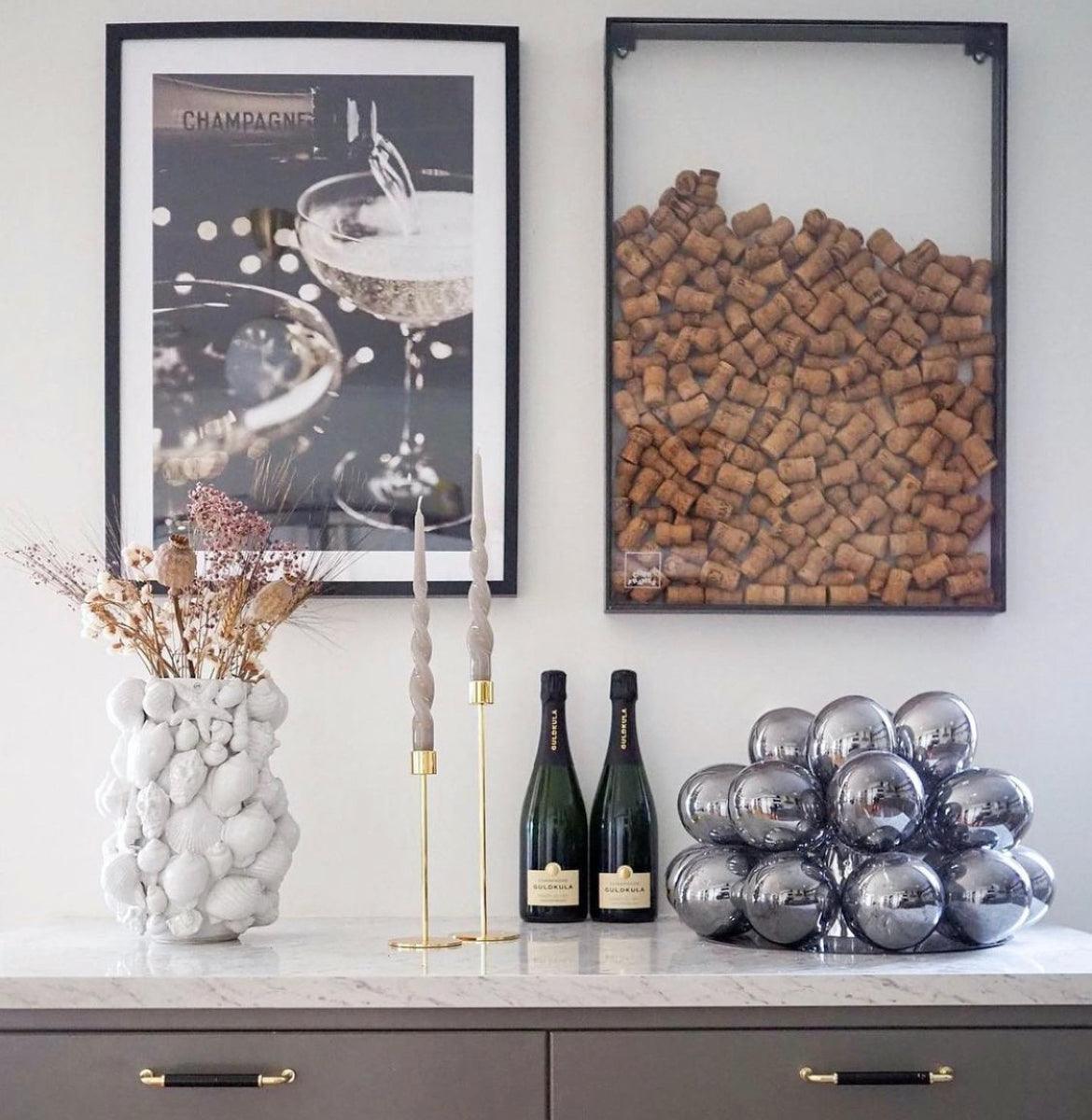
How High Should Art Hang Above a Sideboard or Sofa?
When artwork hangs above furniture, its relationship to the furniture matters more than the standard eye-level measurement.
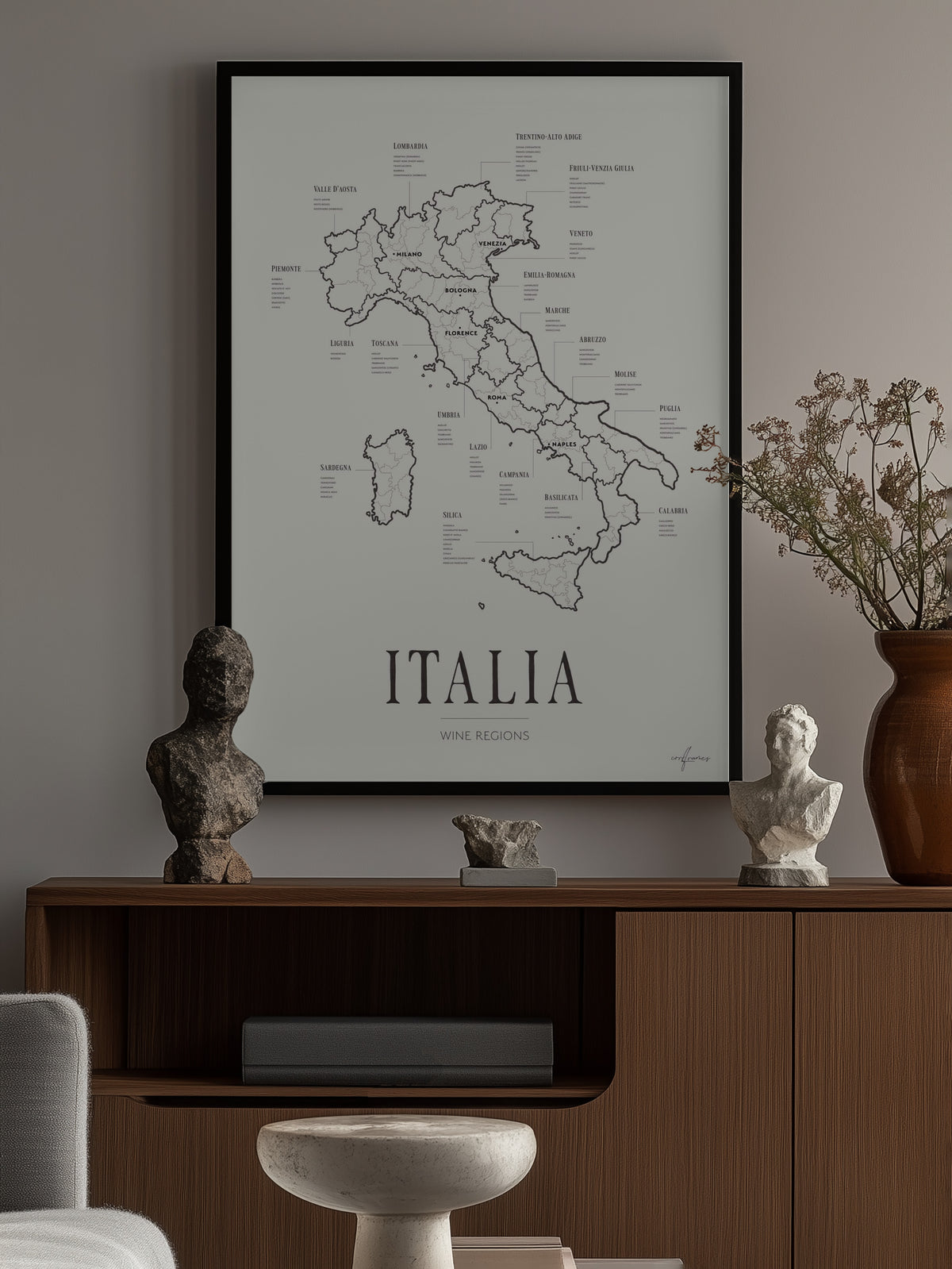
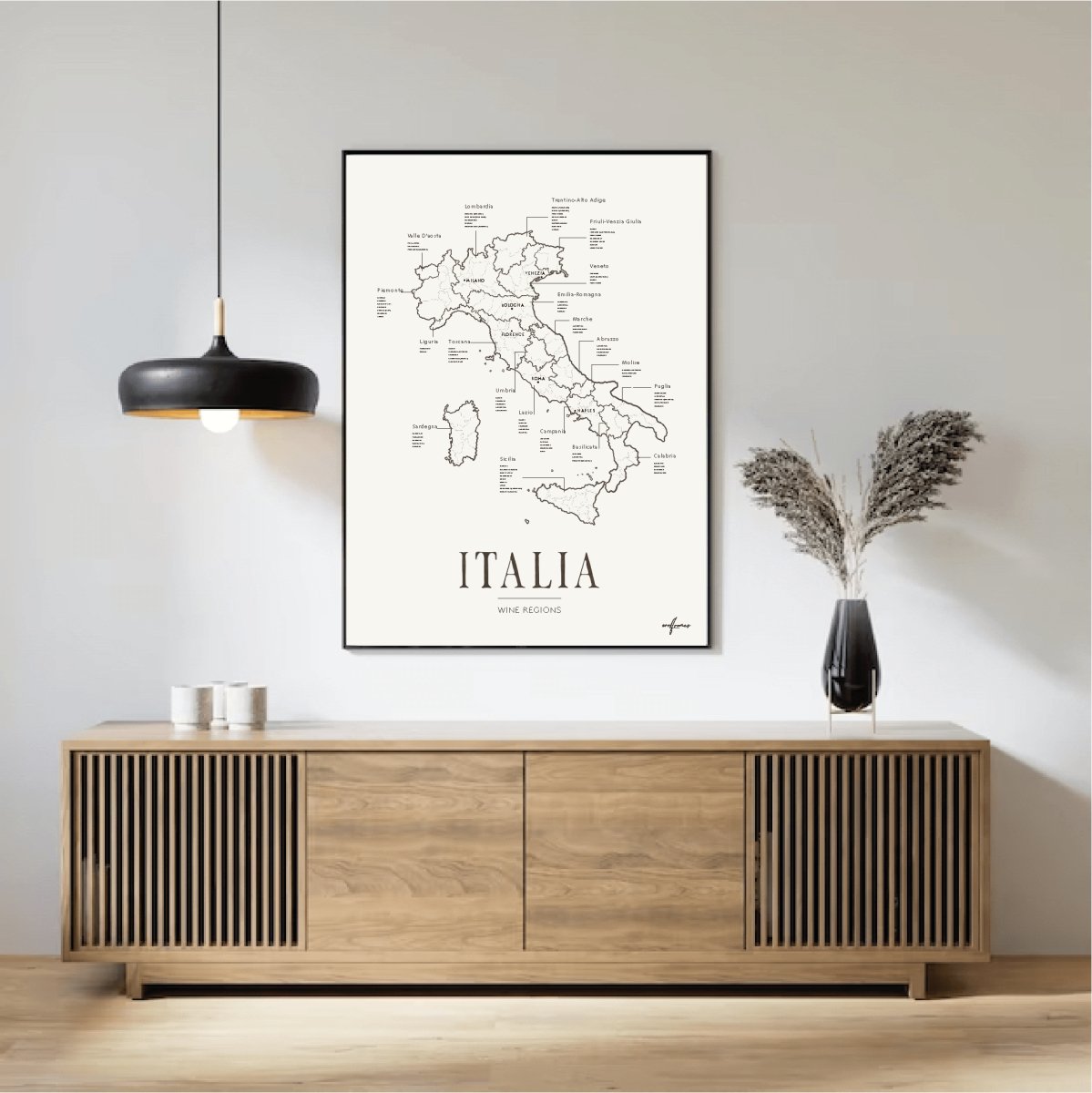
Leave approximately 15–20 cm between the top of a sideboard or console and the bottom of the frame as a useful starting point. This corresponds closely to the 6–8-inch spacing recommended by interior designers. (Architectural Digest)
The artwork should appear connected to the furniture rather than floating separately above it.
Also consider:
Lamps, vases and plants placed on the furniture
The height and width of the furniture
Whether the artwork is one large piece or a group
The main angle from which the arrangement is viewed
When hanging art above a sofa, make sure it does not feel uncomfortably close to anyone seated beneath it. A slightly larger gap may be appropriate.
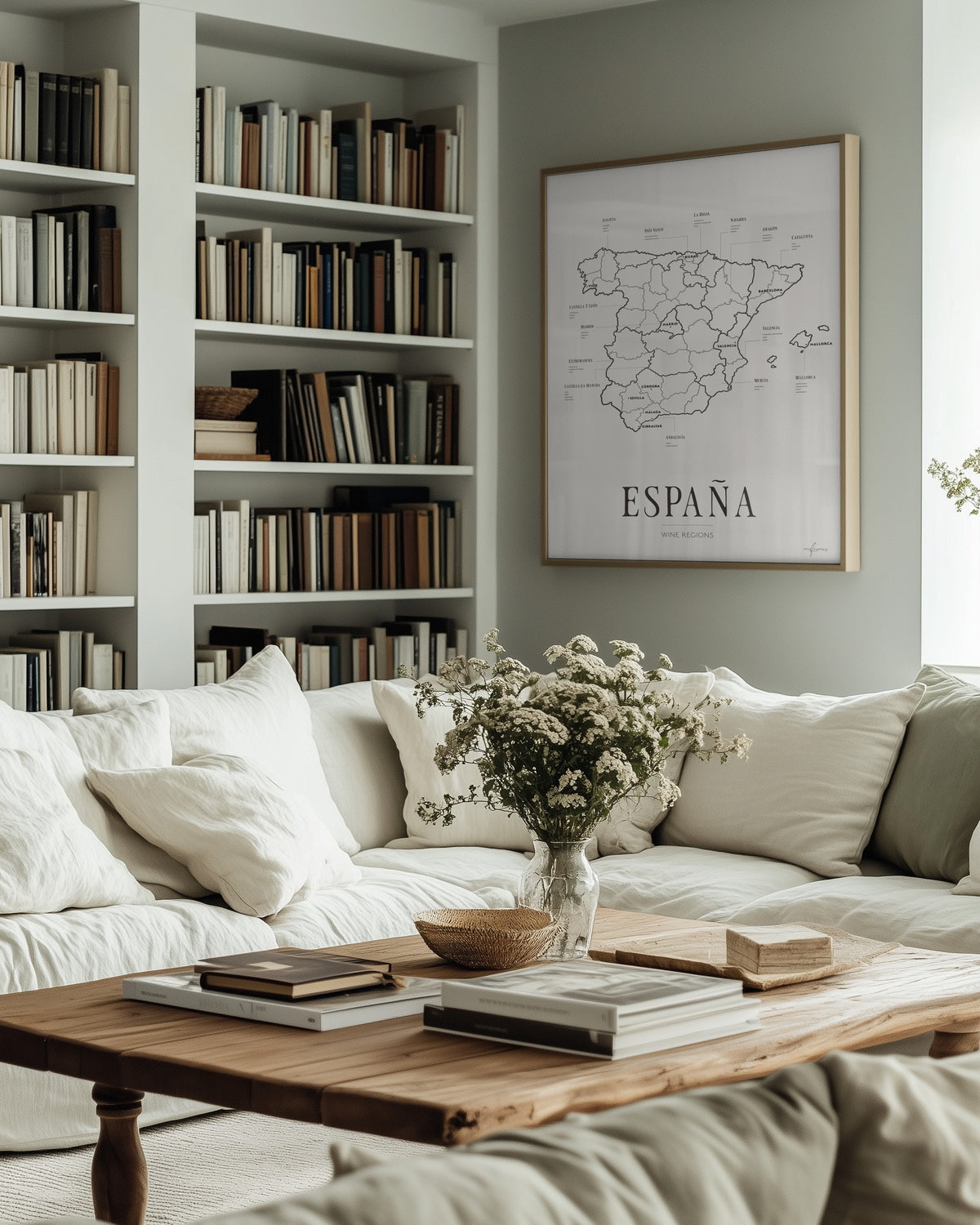
Corkframes’ Poster Collection includes designs in several formats, making it possible to choose artwork that relates to both the height and width of the furniture below. (Corkframes.com)
Should Dining-Room Art Hang Lower?
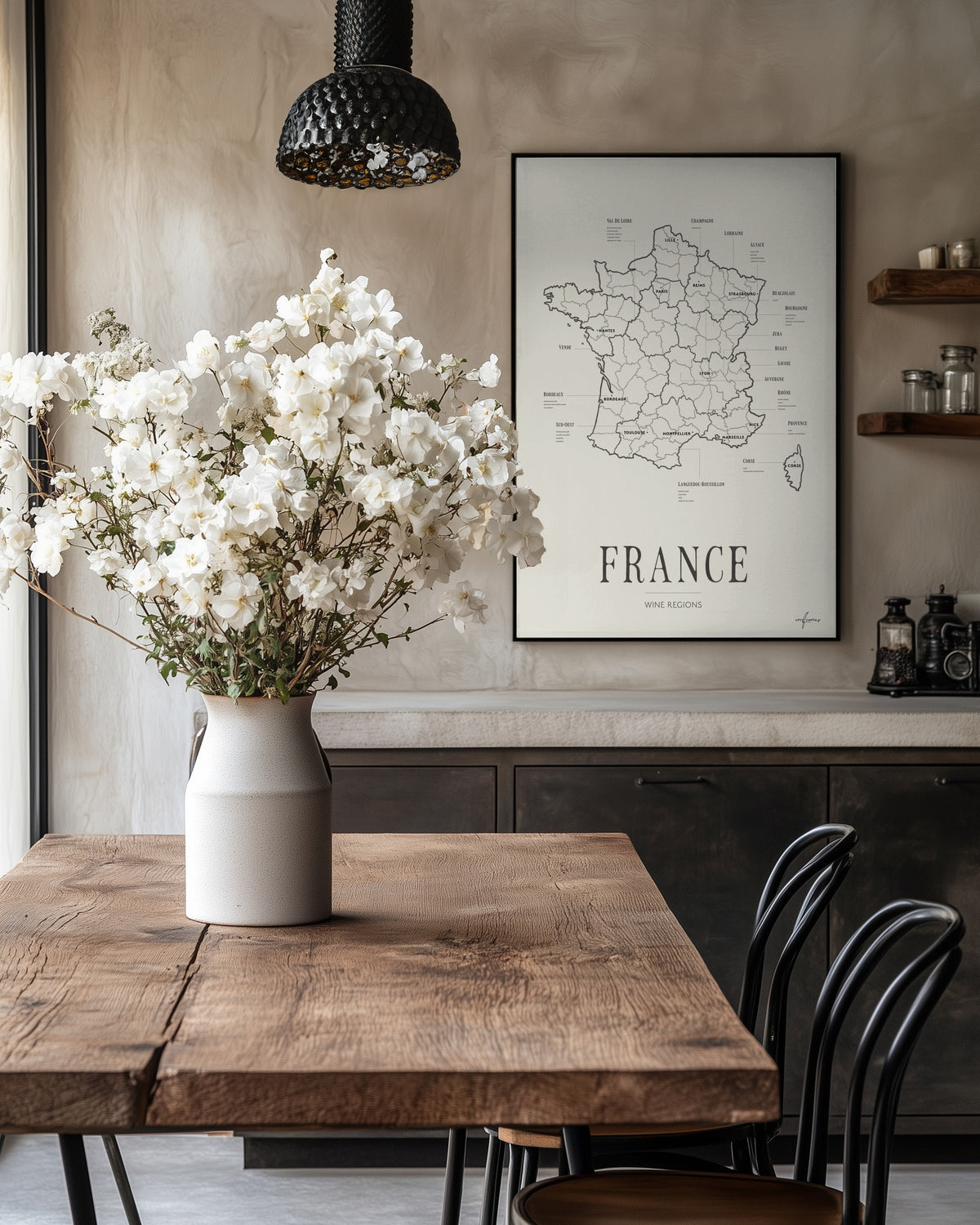
Dining-room artwork is often viewed while people are seated, so it may look better slightly lower than art in a hallway or entrance.
Begin with the 145 cm centre guideline, then evaluate the position from the dining table. Lower the artwork slightly when it feels disconnected from the furniture or sits above the natural line of sight.
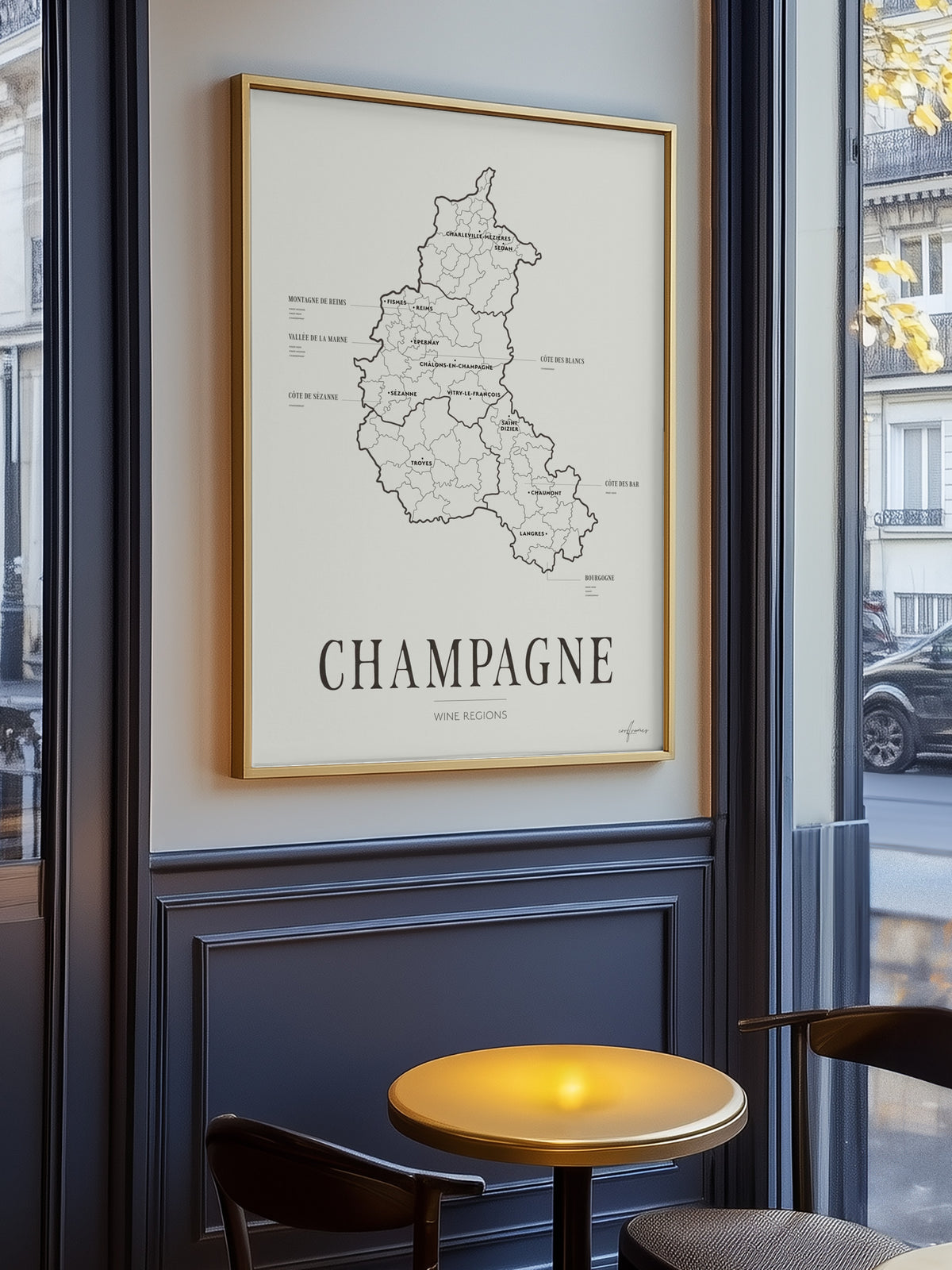
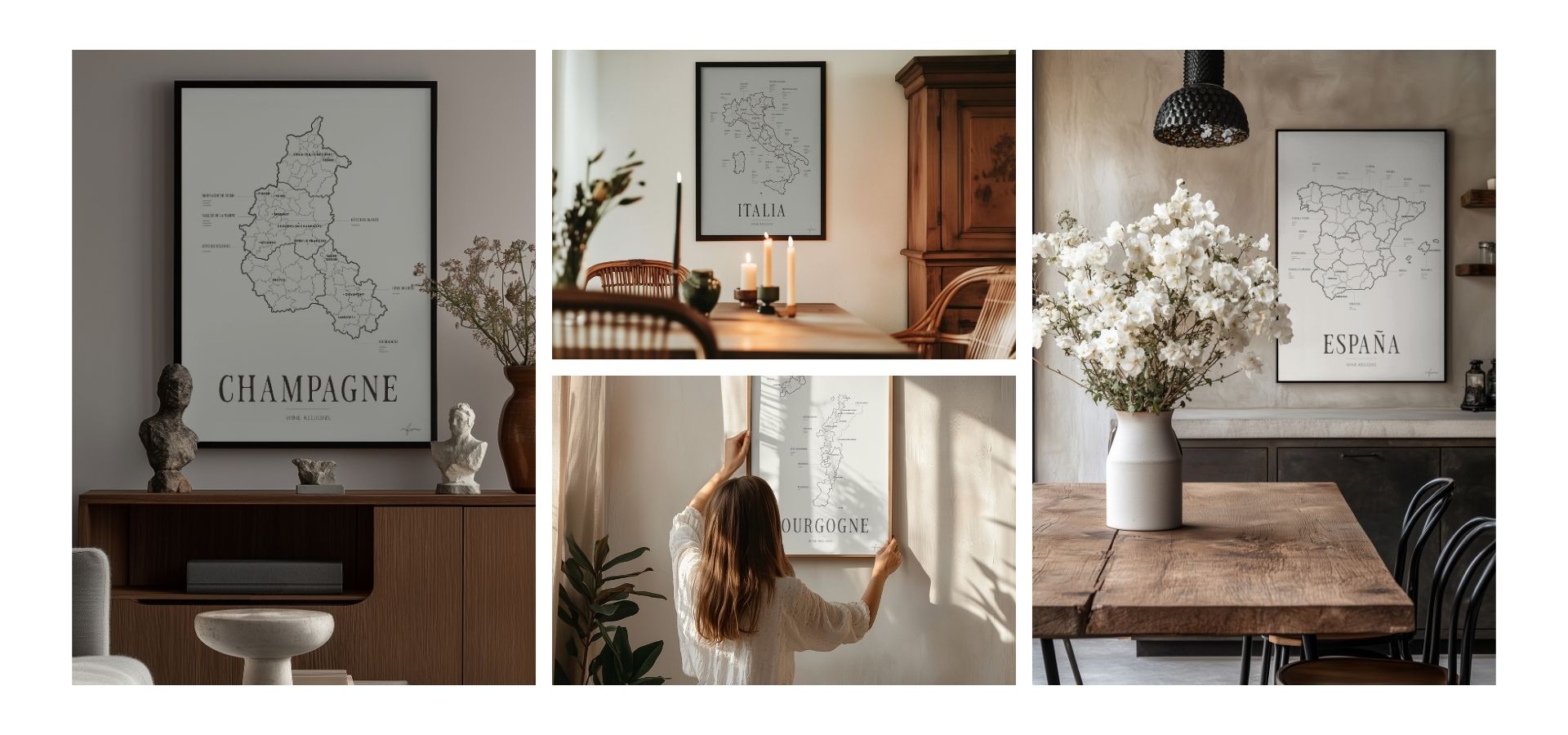
Detailed artwork, such as a wine map, should remain comfortable to examine at close range. Avoid placing it so high that guests need to look sharply upwards to read smaller details.
Corkframes’ Wine Maps Collection includes maps of countries and individual wine regions that can be displayed near a dining table, above a sideboard or in a home wine area. (Corkframes.com)
High ceilings do not automatically mean that the artwork should be hung higher. The placement should still relate to people, furniture and the way the room is used.
How Should You Hang a Gallery Wall?
Treat a gallery wall as one complete composition rather than a collection of unrelated frames.
The visual centre of the entire arrangement should normally sit close to eye level. Lay the frames on the floor first or create paper templates in the correct sizes and attach them temporarily to the wall.
A practical process is to:
Position the largest or strongest piece first.
Build the arrangement around it.
Keep the gaps between frames reasonably consistent.
Check the full composition from several viewpoints.
Adjust the group before making permanent holes.
Spacing of approximately 5–10 cm between frames often creates a connected arrangement without making it feel crowded. Smaller frames may suit tighter spacing, while larger pieces can usually carry more space around them.
Using the same frame finish can create a calm, uniform result. Corkframes’ Premium Poster Frames are available in black, white, natural oak and smoked oak, including options intended for coordinated sets. (Corkframes.com)
When Should You Ignore the Standard Rule?
The eye-level guideline may need to be adjusted when:
The room is mainly used while seated.
Artwork hangs above unusually tall furniture.
A large poster extends far below the standard centre point.
Frames follow a staircase.
Architectural details limit the available wall area.
Several artworks form a vertical arrangement.
The goal is visual balance, not exact compliance with one measurement.
Mark the position first, step back and assess how the artwork relates to the whole room. Lowering a frame by only a few centimetres can make it feel noticeably more connected to the furniture beneath it.
Frequently Asked Questions
What is the standard height for hanging wall art?
A widely used starting point is to place the centre of the framed artwork approximately 145 cm from the floor. Adjust the height when furniture, seating or the room’s proportions make another position feel more natural.
How far above a sideboard should a picture hang?
Begin with a gap of approximately 15–20 cm between the sideboard and the bottom of the frame. Include lamps, plants and other objects on the furniture when judging the final composition.
Should artwork be centred on the wall or the furniture?
Artwork above furniture should usually be centred in relation to that furniture. On an empty wall, use the available wall area and the main viewing position as your reference.