
Understanding the Wine Regions of France
French wine is closely connected to its place of origin. Labels often emphasise the region or appellation rather than the grape variety, which can make French wine difficult to understand at first.
Learning the major wine regions provides a practical starting point. Climate, soil, grape varieties and local traditions all influence the wines produced in each area.
Bordeaux
Bordeaux lies in south-western France and is particularly known for blended red wines.
Common red grapes include:
Cabernet Sauvignon
Merlot
Cabernet Franc
The Left Bank is generally associated with Cabernet Sauvignon-led blends, while Merlot commonly plays a larger role on the Right Bank. Bordeaux also produces dry white wines and celebrated sweet wines, including those from Sauternes.
Burgundy
Burgundy, known as Bourgogne in France, is strongly associated with Pinot Noir and Chardonnay.
The region includes several distinct areas:
Chablis
Côte de Nuits
Côte de Beaune
Côte Chalonnaise
Mâconnais
Small differences in vineyard location, slope and soil can significantly influence the character and classification of the wine. Burgundy is particularly known for its focus on terroir and individual vineyard sites.
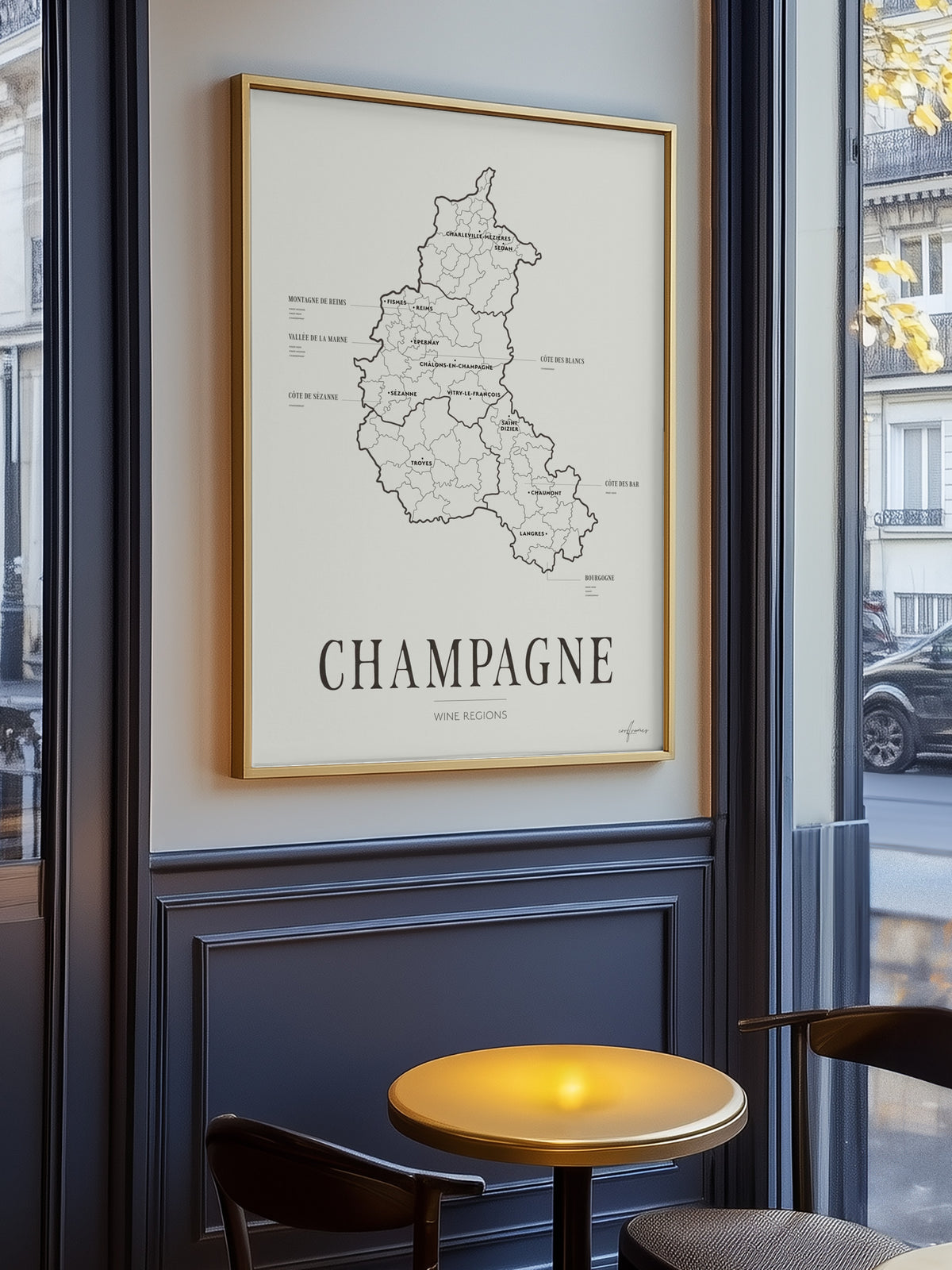
Champagne
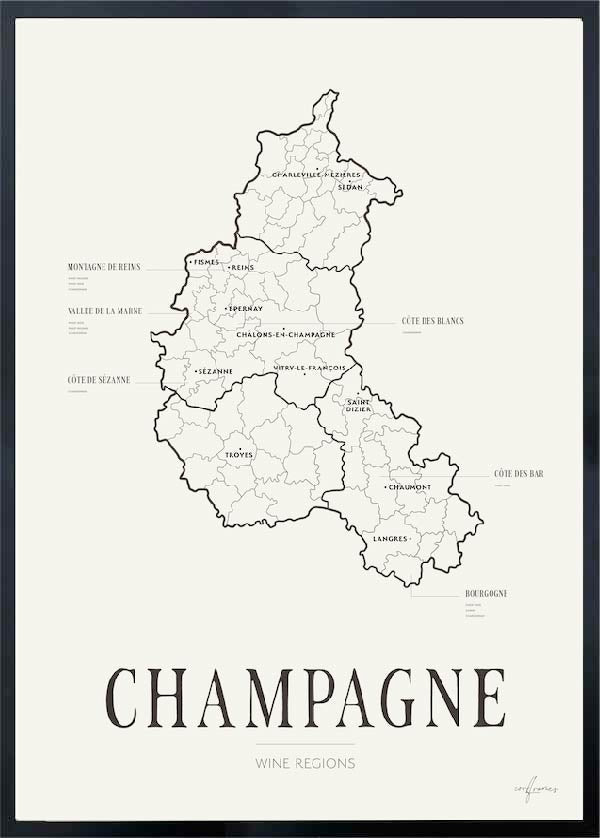
Champagne is located in north-eastern France and is the protected place of origin for Champagne sparkling wine.
The principal grapes are:
Chardonnay
Pinot Noir
Meunier
The cool climate helps the grapes retain high acidity, while the region’s chalk-rich soils contribute to the distinctive character of its wines.
The Loire Valley
The Loire Valley follows the Loire River across a broad area of western and central France. It produces an unusually varied range of wines.
Important grapes include:
Sauvignon Blanc
Chenin Blanc
Cabernet Franc
Melon de Bourgogne
Styles range from crisp Muscadet and aromatic Sauvignon Blanc to sparkling wines, sweet Chenin Blanc and lighter red wines.
The Rhône Valley
The Rhône Valley stretches from around Lyon towards the Mediterranean and is generally divided into northern and southern sections.
Northern Rhône red wines are closely associated with Syrah. Viognier, Marsanne and Roussanne are important white grapes.
Southern Rhône wines are frequently blends featuring Grenache, Syrah and Mourvèdre. Well-known appellations include Côte-Rôtie, Hermitage and Châteauneuf-du-Pape.
Alsace
Alsace lies close to the German border and is recognised for aromatic white wines. Unlike many other French regions, Alsace labels frequently state the grape variety.
Important grapes include:
Riesling
Gewürztraminer
Pinot Gris
Pinot Blanc
The wines range from dry and mineral to rich, aromatic and sweet.
Provence
Provence is best known internationally for pale, dry rosé, although the region also produces red and white wines.
Common grapes include Grenache, Cinsault, Syrah and Mourvèdre. The warm Mediterranean climate encourages ripe fruit flavours, while many of the rosé wines retain a fresh and dry character.
Languedoc-Roussillon
Languedoc-Roussillon covers a large area along France’s Mediterranean coast. It produces red, white, rosé, sparkling and sweet wines.
Grenache, Syrah, Mourvèdre and Carignan are widely planted, together with several international grape varieties. The region combines long-standing wine traditions with considerable experimentation and stylistic variety.
Beaujolais
Beaujolais lies immediately south of Burgundy and is primarily associated with the Gamay grape.
Its wines range from light and fruit-driven Beaujolais Nouveau to more structured wines from the ten recognised Beaujolais crus. These include Morgon, Fleurie and Moulin-à-Vent.
How a French Wine Map Helps
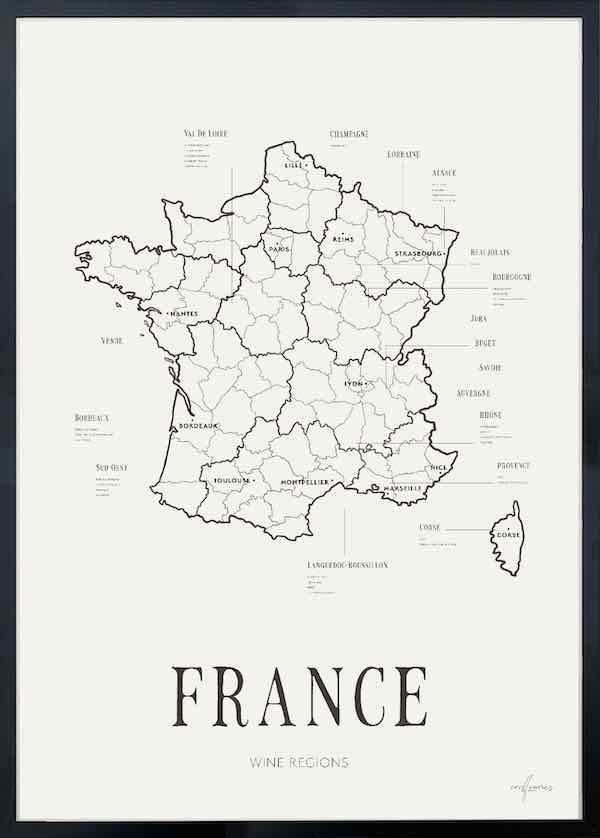
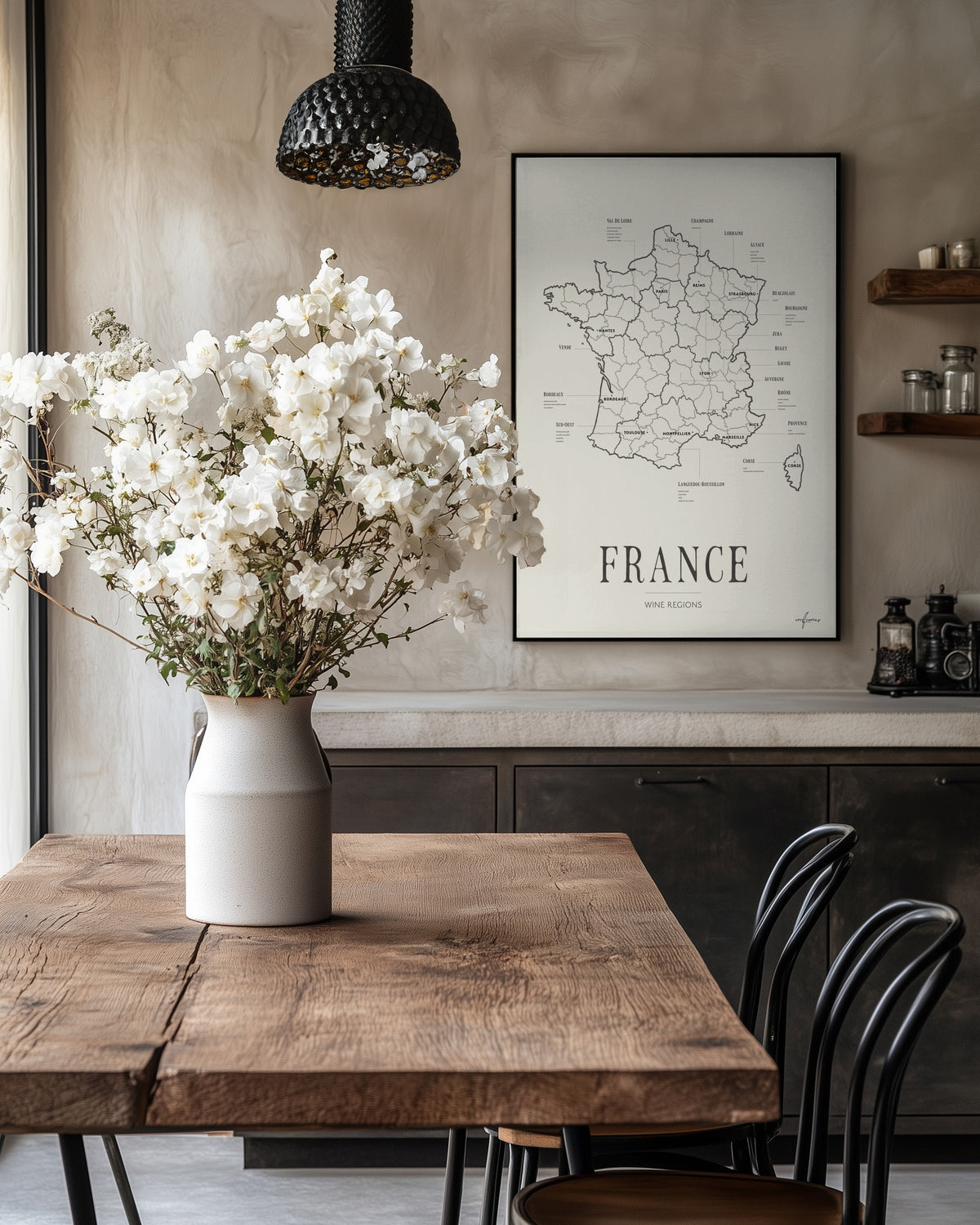
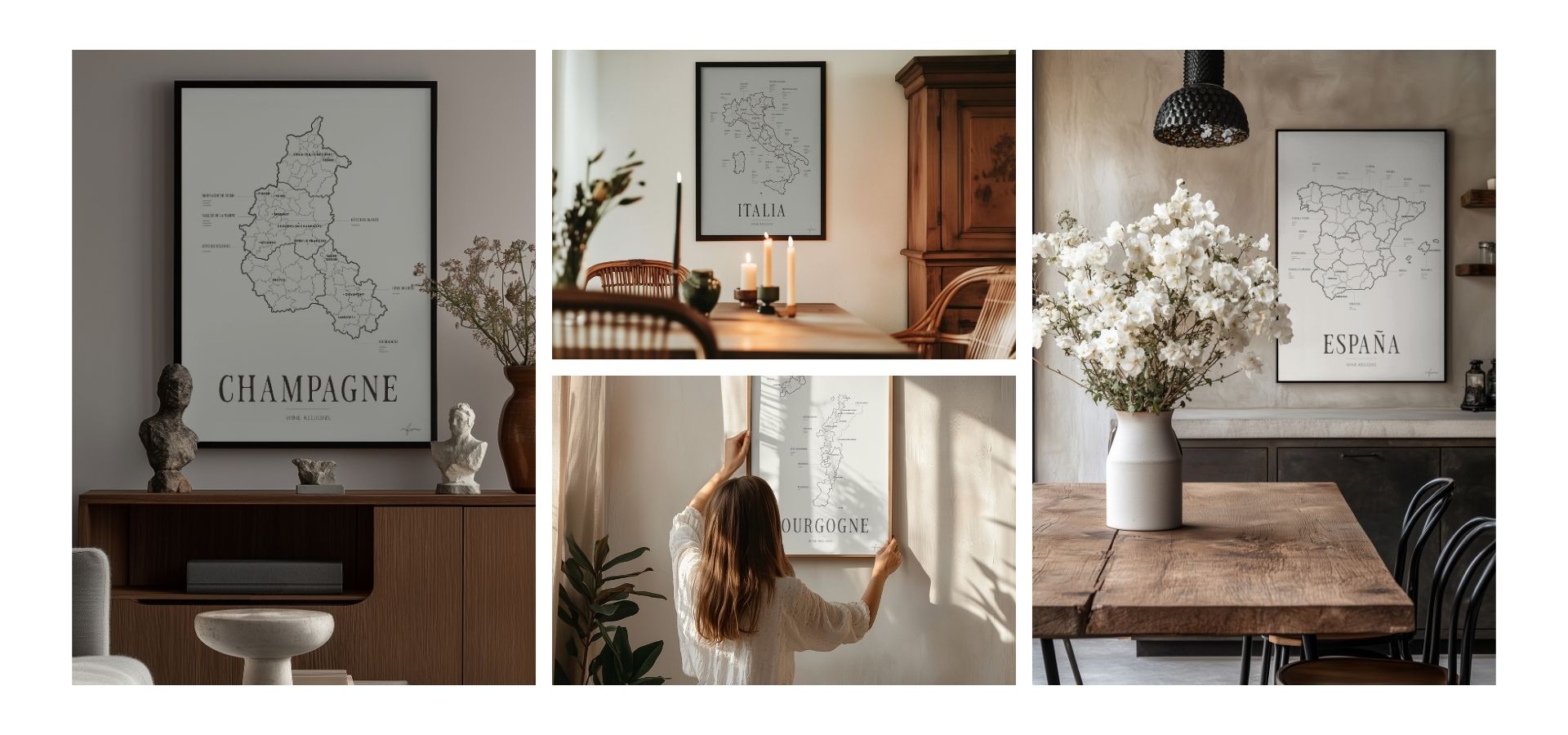
A wine map makes it easier to understand where France’s regions are located and how they relate to one another. It can show major wine areas, regional grapes and geographical patterns that may be difficult to remember from text alone.
The France Wine Region Map from Corkframes presents the country’s wine geography as both a practical learning tool and a decorative piece for a kitchen, dining room or home wine space.
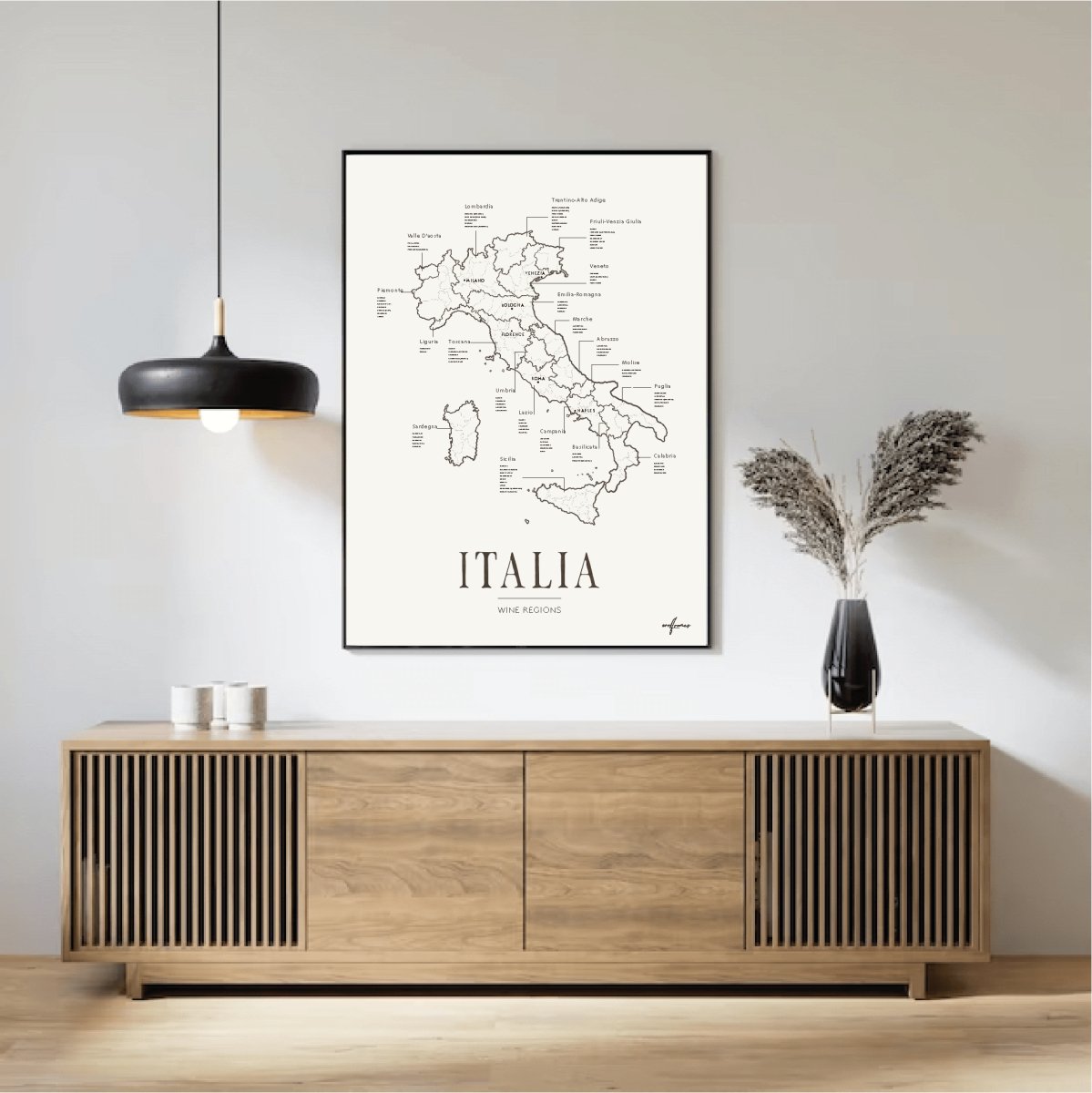
You can also explore Corkframes’ complete Wine Maps Collection, featuring maps of celebrated wine countries and regions.
A Simple Way to Start Exploring French Wine
There is no need to learn every French appellation at once. Begin with the major regions and connect each one to a few important grapes:
Bordeaux: Cabernet Sauvignon and Merlot
Burgundy: Pinot Noir and Chardonnay
Champagne: Chardonnay, Pinot Noir and Meunier
Loire Valley: Sauvignon Blanc and Chenin Blanc
Rhône Valley: Syrah and Grenache
Alsace: Riesling and Gewürztraminer
Beaujolais: Gamay
Once the geography becomes familiar, French wine labels and restaurant wine lists become much easier to interpret.
Explore the France Wine Region Map and discover how France’s vineyards, grapes and regional traditions connect.
Frequently Asked Questions
What are the main wine regions of France?
The best-known French wine regions include Bordeaux, Burgundy, Champagne, the Loire Valley, the Rhône Valley, Alsace, Provence, Languedoc-Roussillon and Beaujolais.
Why do French wines often show a region instead of a grape?
French wine traditions frequently define wines by their geographical origin and appellation. The region can indicate which grapes and production methods are permitted.
Which French region is famous for Pinot Noir?
Burgundy is the French region most closely associated with Pinot Noir.
Which French wine region is best known for rosé?
Provence is particularly famous for pale, dry rosé wines.
What is the easiest way to learn French wine regions?
Start with a wine map and learn one or two signature grapes for each major region.
Explore the map: France Wine Region Map — our detailed map of France's wine regions.