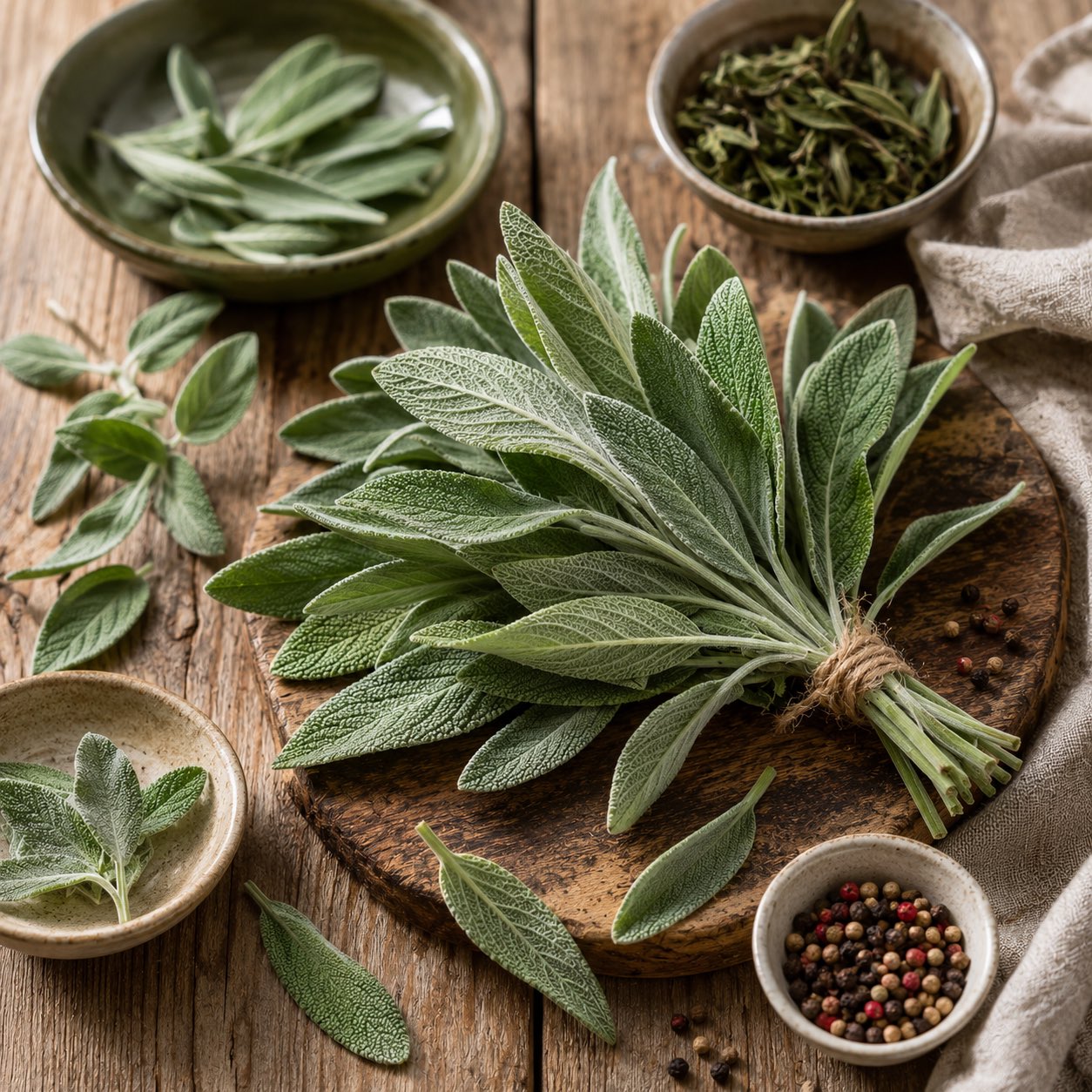


Sage is one of the most distinctive herbs in the kitchen. It has a warm, earthy, slightly peppery and bitter flavour that works especially well with butter, pasta, meat, root vegetables, beans and cheese.
Used in the right way, sage adds depth and elegance to a dish. Used too generously, it can easily become overpowering. That is why sage is best handled with a little care.
The most common culinary sage is Salvia officinalis. It is especially popular in Italian cooking, where it is often paired with browned butter, pasta, gnocchi, pork, chicken and pumpkin.
What Does Sage Taste Like?
Sage has a bold and aromatic flavour. It can be described as:
Earthy
Peppery
Slightly bitter
Warm
Herbaceous
Savoury
Fresh sage has a greener and softer flavour. Dried sage is more concentrated and should be used in smaller amounts.
Different Types of Sage
Common Sage
Common sage is the most widely used variety in cooking. It has grey-green, slightly fuzzy leaves and a strong, savoury flavour.
It works best in warm dishes where the herb can meet butter, oil, meat or roasted vegetables.
Best with:
Pasta with browned butter
Gnocchi
Chicken
Pork
Pumpkin
Potatoes
Hearty stews
Purple Sage
Purple sage has dark purple leaves and is used both as a culinary herb and as a decorative plant. Its flavour is similar to common sage, but often slightly milder.
Best with:
Herb butter
Grilled vegetables
Lamb
Pork
Cheese boards
Decorative serving platters
Golden Sage
Golden sage has green leaves with yellow edges or markings. It is beautiful in the garden or in a pot, but it can also be used in cooking.
The flavour is usually milder than common sage, which makes it a good choice when you want a softer sage note.
Best with:
Chicken
Vegetable dishes
Herb butter
Light pasta dishes
Tricolor Sage
Tricolor sage has green, white and purple leaves. It is often grown for its decorative look, but it can also be used in the kitchen.
Best with:
Cream cheese
Herb butter
Light sauces
Garnishing
Pineapple Sage
Pineapple sage is different from classic culinary sage. It has a fruitier aroma that can remind you of pineapple and is better suited to sweet or fresh recipes.
Best with:
Tea
Cocktails
Fruit salads
Desserts
Syrups
Fresh or Dried Sage?
Both fresh and dried sage can be used in cooking, but they work in different ways.
Fresh sage is best when the herb is allowed to stand out. It is especially good when fried whole in butter until the leaves become lightly crisp.
Use fresh sage for:
Pasta
Gnocchi
Potatoes
Pumpkin
Browned butter
Garnishing
Dried sage has a more concentrated flavour and works best in dishes that are cooked for longer.
Use dried sage for:
Stews
Soups
Stuffings
Slow-cooked dishes
Oven-baked dishes
A simple rule is to start with a small amount and taste as you go. It is easy to add more, but difficult to save a dish where sage has become too dominant.
How to Use Sage in Cooking
Sage is at its best when it meets fat and heat. That is why sage and butter is such a classic combination.
When butter is browned, it develops a nutty flavour that softens the sage and makes the dish richer and more elegant.
Simple ways to use sage:
Fry fresh sage leaves in butter and serve with pasta
Add a few leaves to a tray of chicken or roasted root vegetables
Chop sage into butter for bread, meat or vegetables
Use a small amount of dried sage in soups and stews
Pair sage with parmesan, lemon, garlic or mushrooms
Sage with Pasta and Gnocchi
One of the most classic ways to use sage is with pasta or gnocchi, browned butter and parmesan. It is simple, but full of flavour.
The combination of butter, sage and parmesan creates a rich and balanced dish. It works especially well with gnocchi, ravioli, filled pasta or pasta with pumpkin.
Sage with Meat and Chicken
Sage pairs very well with pork, chicken, turkey and lamb. Its strong flavour works beautifully with fat, salt and roasted notes.
Use sage in marinades, stuffings, sauces or oven-baked dishes. In Italian cooking, sage is often paired with veal, pork, butter, wine and lemon.
Sage in Vegetarian Cooking
Sage is also a very useful herb in vegetarian cooking. It works especially well with ingredients that have sweetness, nuttiness or richness.
Good vegetarian combinations:
Pumpkin and sage
Sweet potato and sage
Mushrooms and sage
Beans and sage
Lentils and sage
Potatoes and sage
Sage can add depth to a simple vegetable dish and make vegetarian cooking feel richer and more savoury.
Flavours That Pair Well with Sage
Sage works best with clear but balanced flavours.
Good combinations:
Browned butter
Lemon
Parmesan
Garlic
Mushrooms
Pumpkin
Apple
Honey
Potatoes
Cream
Nuts
White wine
Drinks That Pair Well with Sage
Food with sage often has a savoury, nutty and rich flavour profile. Drinks with freshness and structure usually work best.
For pasta with sage and browned butter, choose a white wine with good acidity, such as Soave, Verdicchio or a fresh Chardonnay without too much oak.
For chicken or pork with sage, both white wine and lighter red wine can work well. Pinot Noir, Barbera and Sangiovese are good choices because they offer freshness and fruit without overpowering the dish.
For vegetarian dishes with pumpkin, root vegetables or mushrooms, fresh white wines and lighter red wines are both good options.
Good non-alcoholic pairings include:
Apple must
Non-alcoholic sparkling wine
Lemon-based alcohol-free drinks
Herbal iced tea
Non-alcoholic white wine with good acidity
Common Mistakes When Cooking with Sage
The most common mistake is using too much. Sage is intense and can quickly become bitter or perfumed.
Avoid:
Using too many leaves at once
Mixing sage with too many other strong herbs
Using sage like a regular salad herb
Letting dried sage dominate the whole dish
Sage works best when it is paired with a few carefully chosen flavours.
Sage is a bold and aromatic herb that works best in dishes with fat, heat and rich ingredients. Common sage is the most useful variety in the kitchen, while purple sage, golden sage, tricolor sage and pineapple sage add both flavour and visual variation.
Use sage with pasta, gnocchi, chicken, pork, pumpkin, potatoes, mushrooms and beans. Fry it in butter, pair it with parmesan or lemon, and use it with care.
Handled well, sage becomes one of the most elegant and flavourful herbs in the kitchen.